
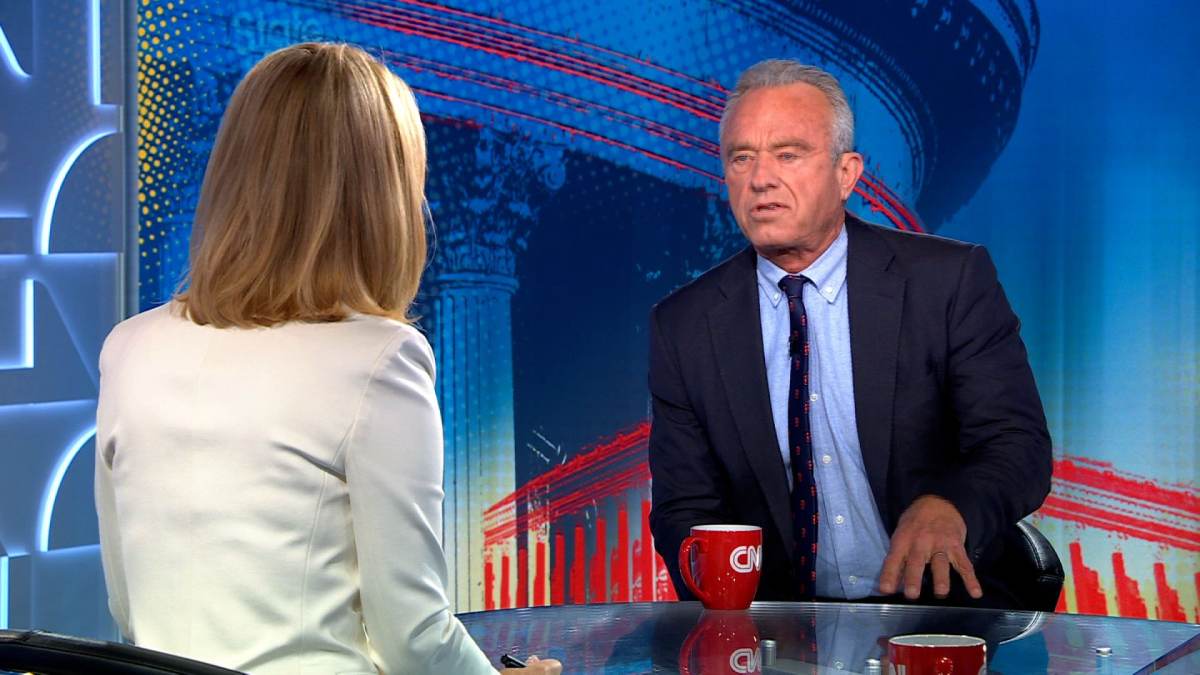
Watching HHS Secretary Robert F. Kennedy Jr. sit across from Dana Bash on CNN was a reminder of something many Americans have not seen enough of since COVID warped and ruined the media landscape: an actual debate.
Not a panel where everyone already agrees. Not a segment built around dismissing one side before it speaks. A real exchange where competing ideas are presented and viewers are trusted to make up their own minds.
Whether you agree with every argument Kennedy made is almost beside the point. The larger issue is that millions of Americans spent years being told there was only one acceptable way to think about COVID. If you questioned government policy, you were often portrayed as questioning science itself. If you criticized lockdowns, vaccine mandates, school closures, or the way public health officials communicated with the public, you risked being labeled irresponsible or worse.
That wasn’t healthy for science or open, civil debate.
Science has never advanced because experts declared a debate over. It advances because evidence is questioned, theories are challenged, and conclusions are tested again and again. Throughout history, ideas once treated as unquestionable have been revised or abandoned when new evidence emerged. That process only works when people are free to ask uncomfortable questions without being written off before the conversation even begins.
During COVID, too much of the media abandoned that principle, and outright chastised anyone for daring to think differently.
Instead of encouraging debate, many major news organizations presented junk guidance as settled fact. As recommendations changed over time, whether on masking, school closures, or other aspects of the pandemic response, many Americans were left wondering why questions that had once been dismissed outright suddenly became acceptable topics of discussion. That shift did more than confuse the public. It damaged trust.
Just take school closures for examples. Many warned at the time closing schools and imposing mask mandates would do lasting damaged. Those concerns were entirely dismissed. As of today, test scores are worse than ever and kids are still playing catch up from the expert-imposed damage.
Across much of the media landscape, dissenting voices struggled to find a platform. Social media companies removed content under misinformation policies, prominent accounts were suspended, and many credentialed critics argued they had little opportunity to challenge prevailing narratives in mainstream outlets. Some of those critics were wrong. Some raised questions that deserved serious scrutiny. The problem was that too often the distinction was never made because the debate never happened.
That is why Kennedy’s recent interview mattered.
Dana Bash challenged him aggressively, and she should have. That’s her job. Kennedy dismantled her ideologically-backed arguments, and that’s his. The audience got to watch the exchange and decide for itself. That is how journalism is supposed to work. It is certainly healthier than assuming viewers cannot be trusted to hear competing arguments.
One of the biggest mistakes of the COVID era was confusing disagreement with danger. Institutions often seemed to believe that allowing certain arguments to be heard would undermine public confidence. In many cases, the opposite happened. When people feel their questions are ignored instead of answered, they stop trusting the institutions doing the ignoring.
That collapse in trust did not happen overnight, and it wasn’t caused by one interview or one network. It was built over years of confident headlines, shifting guidance, and a media culture that too often treated skepticism as something to suppress instead of something to address.
Kennedy has spent years arguing that Americans deserved more transparency and more debate. You do not have to accept every conclusion he reaches to recognize that point. In fact, the best way to challenge controversial ideas has never been censorship or exclusion. It has always been open discussion backed by evidence.
If anything, CNN’s interview proved that point.
Viewers watched two people with fundamentally different views sit down and argue their case. No one was forced to agree with either side. No one needed a moderator to tell them what they were allowed to think.
That is how a confident society handles disagreement.
Looking back, perhaps the greatest lesson of the pandemic is not that every expert was wrong (but they pretty much were) or that every skeptic was right (though many have been proven so). It is that institutions lose credibility when they confuse consensus with certainty and authority with truth. Public trust is not built by declaring debates off limits. It is built by allowing those debates to happen in the open.
RFK Jr. has been making that argument for years.
Whether people agree with him or not, it is an argument that deserved to be heard long before it finally reached a dwindling CNN audience.