
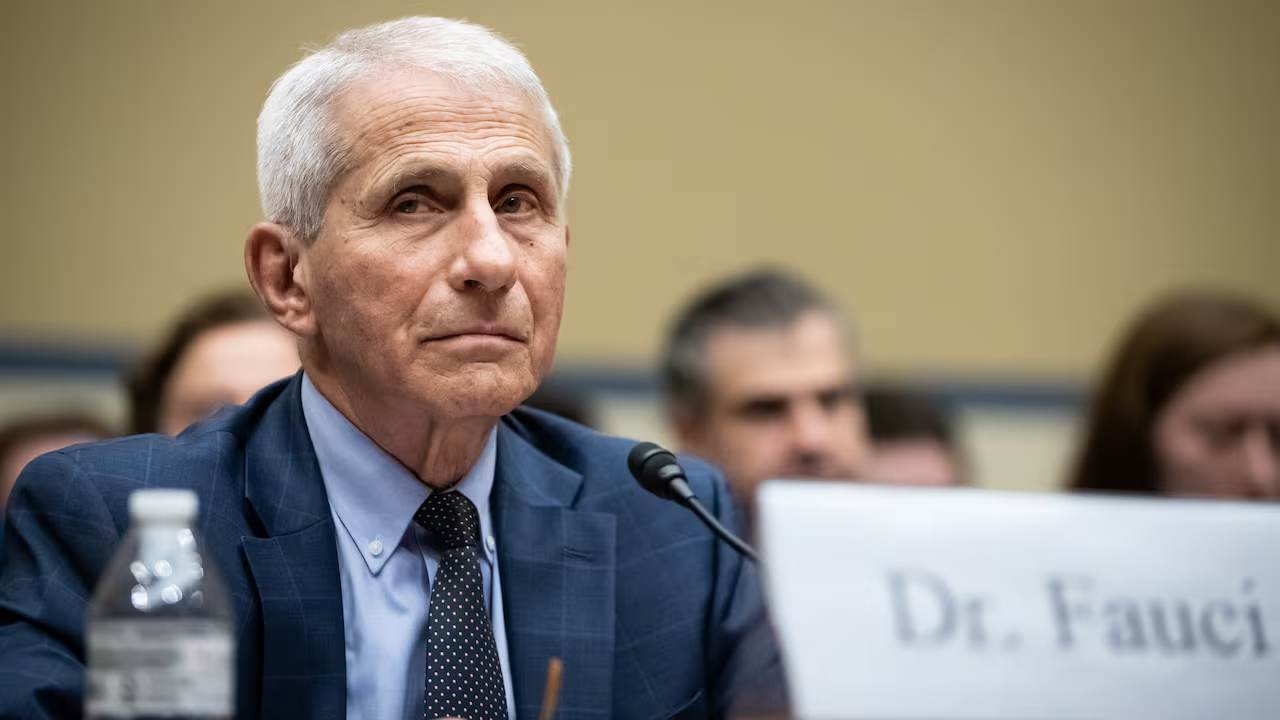
President Donald Trump was asked this week about Joe Biden’s pardon of Anthony Fauci. His answer was surprisingly deferential.
“So he was pardoned by Biden, and I respect that,” Trump said, describing the pardon power as one of the strongest authorities a president possesses.
Respect it? Why?
Biden did not pardon Fauci for a named offense. There was no indictment, no conviction and no public accounting of conduct that supposedly required mercy. Instead, Biden granted Fauci a “full and unconditional pardon” for any federal offenses he may have committed or participated in during a period stretching from January 1, 2014, through January 19, 2025.
That language should bother anyone who cares about accountable government.
A pardon traditionally follows some identifiable act. A person is accused, convicted or at least connected to a known investigation, and the president decides that punishment would be unjust or contrary to the national interest. Biden’s pardon of Fauci worked backward. It did not tell the public what Fauci was being forgiven for. It simply closed off federal prosecution across more than a decade of government service.
Biden insisted that Fauci and the other recipients had done nothing wrong, while arguing that politically motivated investigations could damage their reputations and finances. But that explanation creates an obvious problem. If no wrongdoing occurred, why was a sweeping pardon necessary? If possible crimes were serious enough to require presidential protection, why were Americans never told what conduct was under consideration?
The pardon power is undeniably broad. The Supreme Court said in Ex parte Garland that it can be exercised before conviction, and Gerald Ford famously pardoned Richard Nixon before Nixon was charged. Those precedents are the strongest argument for Fauci’s protection.
But Ford’s pardon was tied to Nixon’s presidency and the Watergate scandal, a known course of conduct already under national investigation. Biden’s Fauci pardon named no scandal, no investigation and no category of offense beyond acts associated with his government service. It functioned less like an act of mercy than a legal shield placed around one of Washington’s most powerful officials before investigators could finish their work.
That distinction deserves its day in court.
The argument is not that Trump can announce from the Oval Office that the pardon no longer exists. Nor should the Justice Department pretend existing precedent is meaningless. The argument is that the administration should identify prosecutable conduct, bring a properly supported case and allow Fauci to assert the pardon as a defense. A judge could then decide whether a president may erase potential criminal liability for an unnamed set of offenses covering eleven years.
That would be a real constitutional test, not a campaign slogan.
The issue has become more urgent since Fauci repeatedly invoked the Fifth Amendment during a Senate hearing on the pandemic response. Reuters reported that he refused to answer more than 100 questions, while senators considered whether to pursue contempt proceedings. The legal dispute is complicated because Biden’s pardon covers earlier federal conduct but does not protect Fauci from crimes committed after it was issued, including any new false testimony or unlawful refusal to comply with Congress.
Trump was elected in large part to challenge a Washington system that protects its own. Fauci was not a minor official. His recommendations affected schools, businesses, medical policy and the daily lives of hundreds of millions of Americans. His private records and government communications remain subjects of legitimate congressional scrutiny.
Yet when presented with the broadest protection Biden could provide, Trump’s first instinct was to respect it.
That is not draining the swamp. It is accepting the swamp’s rules.
Trump does not need to declare Fauci guilty. He does not need to promise a conviction. He needs to stop treating Biden’s last-minute pardon as the final word. Let investigators investigate. Let prosecutors make decisions based on evidence. Let Fauci raise the pardon in court, and let the judiciary decide how far presidential power reaches.
Biden used the pardon power to prevent that process from happening. Trump should not help him finish the job.