
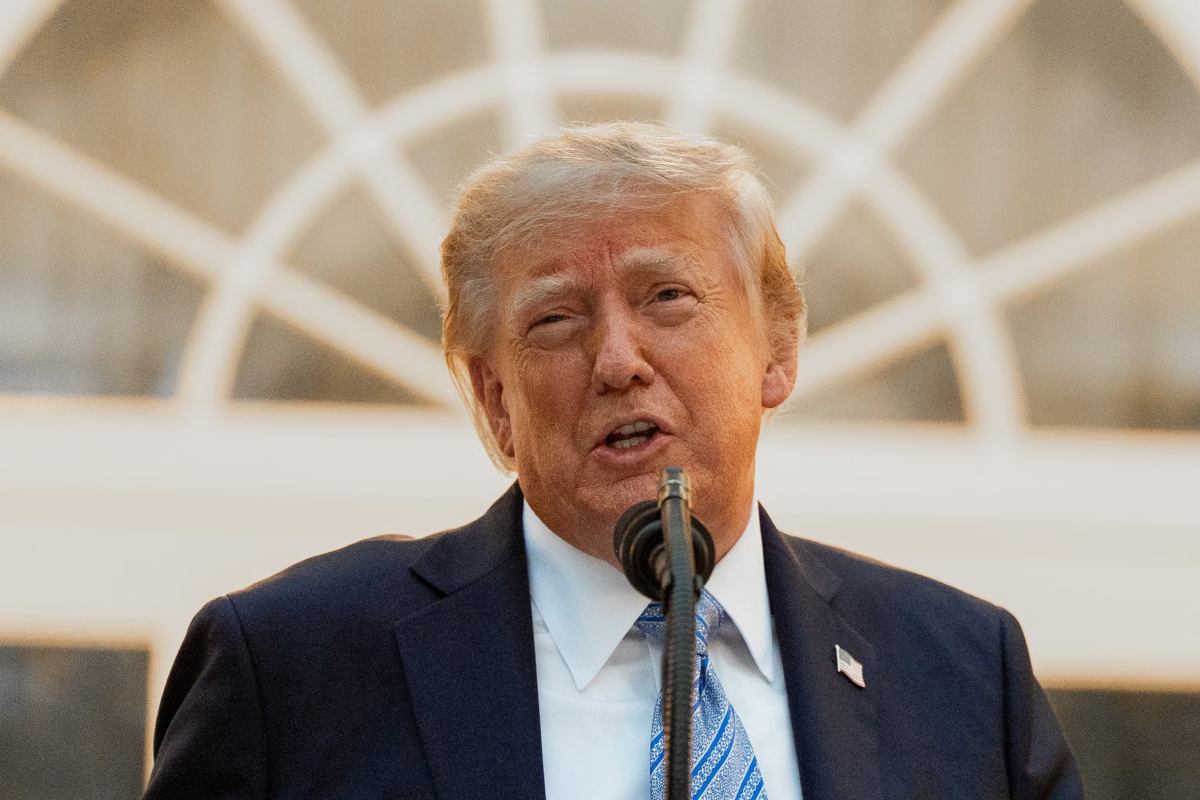
President Trump has spent the past week telling Republicans to pretend his name is on the ballot this November.
Democrats are now giving voters a clearer picture of why he keeps saying it. With voting beginning in the 2026 midterms, House Democrats are openly discussing how they would use a new majority to investigate Trump, his family, his business relationships and parts of his administration. The plans include congressional subpoenas, compelled testimony and potentially the development of evidence that could lead to another impeachment fight.
The latest comments come from Rep. Robert Garcia of California, the ranking Democrat on the House Oversight Committee and the lawmaker positioned to become its chairman if Democrats take control. In a new Financial Times interview, Garcia described an aggressive oversight agenda aimed directly at Trump and his orbit.
Democrats Are Looking Beyond Election Day
Garcia said Democrats would investigate Trump’s family, business associates and billionaire allies, including financial relationships involving Donald Trump Jr. and Jared Kushner. He also pointed toward investigations involving Elon Musk, government contracts and foreign financial connections involving people around the president.
Garcia’s comments do not mean Democrats have settled on impeaching Trump if they win the House. In fact, earlier Reuters reporting found that senior House Democrats and committee aides were preparing a strategy focused first on investigations rather than immediately launching another impeachment effort.
That strategy would rely heavily on powers Democrats do not currently possess. A House majority would give them control of committees, hearing schedules and investigative priorities. Democratic committee chairs could issue subpoenas for documents and testimony and use congressional hearings to examine the administration, private companies and individuals connected to Trump.
Some of the Groundwork Is Already Being Laid
This is not entirely theoretical. Garcia and other Oversight Democrats have spent months sending letters, requesting records and opening inquiries that could expand considerably if they controlled the committee.
The Oversight Committee Democrats currently highlight investigations involving Trump family business interests, administration contracts and the Epstein files. In recent weeks Garcia has also demanded records concerning a Russian businessman who helped pay for a celebration connected to Donald Trump Jr.’s wedding, an administration oil deal and other matters involving the White House.
In August, Reuters reported that Democratic lawmakers and aides were considering inquiries involving companies and financial institutions connected to Trump’s political and business orbit. The discussions included the possible use of hearings, document demands and subpoenas involving government contractors, financial relationships and decisions made by the administration.
The distinction matters. An investigation is not evidence that wrongdoing occurred, and allegations made by Democratic lawmakers remain allegations unless supported by evidence. But control of the House would give Democrats considerably greater power to pursue those questions than they have as the minority.
Then There Is Impeachment
Garcia is also leaving open the possibility that investigations could eventually produce evidence Democrats believe supports impeachment. That is more cautious than promising an impeachment vote immediately after taking power, but it puts the issue back into the conversation before voters have decided who will control the chamber.
Democrats impeached Trump twice during his first presidency. The Senate acquitted him both times. A new Democratic House would again have the constitutional authority to approve articles of impeachment with a simple majority, but removing Trump from office would require conviction by two thirds of senators present, a much higher threshold.
That means winning the House alone would not allow Democrats to remove Trump, enact their entire legislative agenda or simply reverse everything his administration has done. Trump would remain president, retain the veto and continue to control the executive branch. Senate control would separately determine the fate of presidential nominees and much of the legislative agenda.
What a Democratic House could do immediately is change the daily balance of power in Washington. Committee gavels would change hands. Investigations could expand. Administration officials could spend considerably more time answering congressional demands. Legislation favored by the White House could also face a Democratic-controlled chamber.
Trump Is Telling Republicans the Same Thing
Trump appears keenly aware of those stakes. At his rally for Senate candidate Michael Whatley in Gastonia, North Carolina, on Wednesday, Trump repeatedly asked supporters to behave as though he were personally running again.
“In this election, I’m asking you to pretend I’m on the ballot just one more time,” Trump told the crowd, according to the full transcript of his remarks.
Trump returned to the point later in the speech, acknowledging something Republicans have worried about for years: some of his supporters are more attached to him personally than to the Republican Party. He told the crowd that some supporters “like me better than you like the party” and again urged them to vote as though he were running.
He made essentially the same argument again Thursday during a campaign event, saying Republicans do not receive the same turnout when he is absent from the ballot. Trump’s midterm strategy is increasingly explicit. He wants voters who turned out for him in presidential elections to transfer that enthusiasm to Republican candidates in November.
But Some Republicans Are Running Their Own Race
That creates another complication. While Trump is attempting to nationalize the election around himself and his record, some Republicans in competitive races are emphasizing differences with the administration.
A new Wall Street Journal report documents Republican candidates breaking with Trump on issues including the Iran war, tariffs, immigration, beef imports and artificial intelligence data centers. Some Republicans have also shown little enthusiasm for Trump’s proposal to send Americans $5,000 dividend payments.
That does not amount to a wholesale break with Trump. Many of these candidates continue to support large parts of his agenda and want his voters to turn out. The challenge is that candidates running in competitive districts have electorates that can look very different from the national Republican coalition.
Trump is therefore asking Republicans to run as though he is on the ballot while some of the Republicans facing the closest contests are trying to preserve enough political distance to run on their own records.
House Control Means More Than 218 Seats
Much of the midterm coverage naturally focuses on polling, individual races and the arithmetic required to reach 218 seats. The more consequential question is what happens after one party gets there.
If Republicans retain the House, Trump would continue with a Republican majority capable of advancing much of his legislative agenda and controlling congressional investigations. If Democrats win it, Washington would move immediately into divided government, with the opposition party controlling one of the federal government’s most powerful investigative institutions.
Garcia’s comments make clear that Democrats are already thinking beyond the campaign. They are considering which investigations to pursue, which records to seek and which people they may want to bring before congressional committees.
Trump, meanwhile, is telling his supporters not to treat 2026 like an ordinary midterm election. In Gastonia, he warned that Republican priorities could disappear if the party loses and repeatedly asked voters to imagine seeing his own name on their ballots.
There are still more than six weeks until Election Day. But in parts of the country, voting has already begun. The argument over what happens if control of the House changes hands is no longer a hypothetical discussion about some distant election. Democrats are beginning to describe what they would do with the power, and Trump is making increasingly clear that he understands what could come with it.