
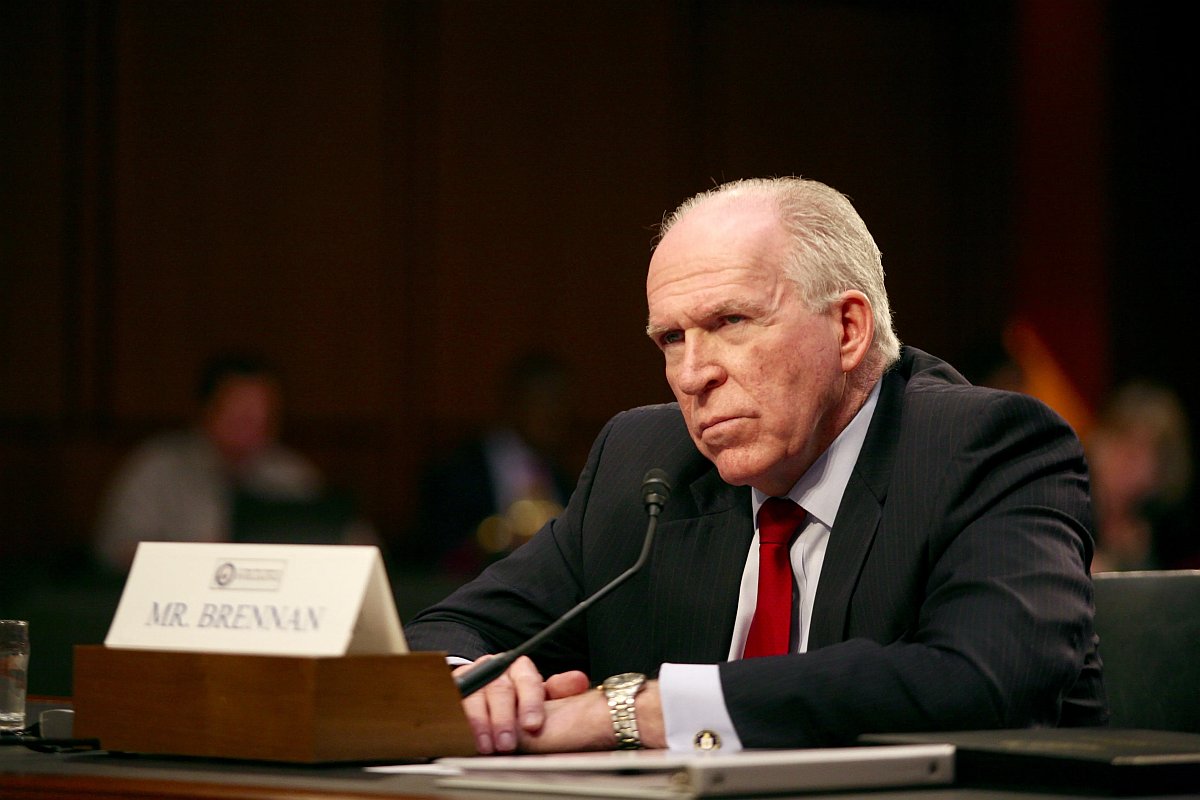
John Brennan spent years defending the intelligence community’s handling of the investigation that consumed much of Donald Trump’s first presidency. Now the former CIA director is facing questions from the other side of a federal investigation.
Brennan has been subpoenaed to testify next month before a federal grand jury in Fort Pierce, Florida, as the Justice Department examines whether former intelligence and law enforcement officials improperly targeted Trump. Former Director of National Intelligence James Clapper is among the other former officials prosecutors are seeking to question as the investigation reaches back into the origins and aftermath of the 2016 Trump Russia controversy.
Brennan is also the target of a separate Justice Department investigation into whether he made false statements to Congress about the Steele dossier and its role in the intelligence assessment produced after the 2016 election. No charges have been filed against Brennan, and his attorneys say the investigations are politically motivated retaliation by an administration targeting one of Trump’s longtime critics.
But the questions surrounding Brennan are not simply about his politics or his long-running feud with Trump. They involve specific statements Brennan made to Congress and subsequently declassified records that Republicans say tell a different story.
What Brennan Told Congress
In May 2023, Brennan sat for a transcribed interview with the House Judiciary Committee and was questioned at length about the Steele dossier, the collection of reports compiled by former British intelligence officer Christopher Steele during the 2016 campaign.
Brennan told investigators that he had not been involved in analyzing the dossier. He went considerably further when discussing the CIA’s role, saying the agency “was not involved at all with the dossier” and directing lawmakers toward the FBI instead.
That testimony became much more important after additional intelligence records were declassified. House Judiciary Chairman Jim Jordan referred Brennan to the Justice Department for possible criminal prosecution in October 2025, arguing that Brennan’s testimony could not be reconciled with those records.
According to the referral, a CIA officer helped draft an annex summarizing Steele material for the 2017 Intelligence Community Assessment. The referral also cites declassified records indicating that Brennan and then-FBI Director James Comey ultimately participated in the decision to include the material.
That does not by itself establish that Brennan committed a crime. Prosecutors would have to establish that a materially false statement was made knowingly and willfully. But it explains why his old testimony has become part of a federal investigation years later.
“The CIA Was Very Much Opposed”
Brennan made another statement to congressional investigators that has since attracted scrutiny. He said “the CIA was very much opposed to having any reference or inclusion of the Steele dossier in the Intelligence Community Assessment.”
According to Jordan’s criminal referral, senior CIA officers did object to using the material because of concerns about its reliability and intelligence tradecraft. The dispute is over what Brennan himself did when those objections reached him.
The referral cites a subsequently declassified CIA memorandum saying Brennan was presented with specific problems in the dossier but supported including the material anyway. It quotes Brennan putting his position in writing: “my bottomline is that I believe that the information warrants inclusion in the report.”
The House Intelligence Committee material cited by Jordan also describes senior CIA officers pressing Brennan to remove the dossier material. According to that account, Brennan refused.
Those records create an obvious question for investigators. When Brennan told Congress that the CIA opposed including the dossier, was he describing objections from people inside the agency, or was he suggesting that the agency under his leadership opposed something he personally supported?
Jordan alleges Brennan’s testimony crossed the line into a knowingly false statement. Brennan disputes wrongdoing. Prosecutors will have to determine whether the differences are criminally significant or can be explained by context, wording or Brennan’s understanding of the questions he was asked.
Why the Steele Dossier Still Matters
The Steele dossier became one of the most controversial documents of the 2016 election and its aftermath. It contained allegations about Trump and Russia, including sensational claims that were never substantiated. The research was funded indirectly by Hillary Clinton’s presidential campaign and the Democratic National Committee through the law firm Perkins Coie and research firm Fusion GPS.
The FBI later relied in part on Steele material in applications to surveil former Trump campaign adviser Carter Page. A Justice Department inspector general investigation found serious errors and omissions in that surveillance process.
The issue in Brennan’s case is more specific. Investigators are examining how the dossier was handled inside the government, what role Brennan played in decisions involving the material, and whether the account he later gave Congress accurately described what happened.
Special Counsel Robert Mueller ultimately did not establish that members of the Trump campaign conspired or coordinated with the Russian government in its election interference activities. Nearly a decade later, the questions facing Brennan concern the conduct of officials involved in the investigation and what Brennan said about his own role.
Brennan Had Another Answer in 2017
The 2023 testimony was not the first time Brennan discussed the dossier under questioning from Congress.
During a public House Intelligence Committee hearing in May 2017, Brennan said the dossier “was not in any way used as a basis for the Intelligence Community assessment that was done.” Jordan’s referral cites that statement as additional evidence of what Republicans describe as a pattern of misleading testimony.
There is an important legal difference. The referral acknowledges that Brennan’s 2017 statement falls outside the applicable five-year statute of limitations for a false-statements charge. The Justice Department therefore could not simply prosecute Brennan today over that testimony under the statute cited by Jordan.
Republicans nevertheless argue that the older testimony provides context for what Brennan told the Judiciary Committee six years later. Brennan and Clapper have rejected claims that they manipulated the intelligence assessment or deliberately misrepresented their work.
From CIA Director to Trump Target
Brennan became one of Trump’s most outspoken critics after leaving the CIA. Their feud has lasted for years, moving from television appearances and public statements into official government action.
Trump revoked Brennan’s security clearance during his first administration. Brennan accused Trump of trying to silence critics. After returning to office, Trump and his allies renewed their focus on the origins of the Russia investigations and on officials who played prominent roles in them.
The Justice Department’s current investigation is considerably broader than the question of Brennan’s congressional testimony. Prosecutors have been examining whether intelligence and law enforcement officials participated in a larger conspiracy against Trump, a theory that Brennan’s attorneys strongly reject.
According to the Associated Press, Brennan has been ordered to appear before the Florida grand jury in October. Prosecutors have also sought testimony from other former intelligence and FBI officials as they continue gathering evidence.
The Prosecutor Left. The Investigation Didn’t.
The future of the investigation briefly became uncertain this month when Joe diGenova, the prosecutor brought into the Justice Department to oversee the sprawling inquiry, resigned after about five months. He departed without obtaining criminal charges.
Attorney General Todd Blanche quickly made clear that the investigation was not ending with him. Blanche said the matters diGenova had been handling would continue “without delay or disruption,” and prosecutors have continued issuing grand jury subpoenas. Reuters reported that the broader inquiry includes the 2017 Russia intelligence assessment as well as later investigations involving Trump.
The absence of charges matters. Despite months of investigation and serious allegations about the conduct of officials inside the federal government, prosecutors have not publicly established that Brennan, Clapper or other former officials participated in a criminal conspiracy.
But the continuing grand jury activity also makes clear that the Justice Department has not abandoned the case. Brennan is scheduled to appear before a grand jury, and prosecutors are seeking testimony from additional people involved in the intelligence and law enforcement decisions surrounding the Trump Russia investigations.
Brennan Is Already Preparing for a Fight
Brennan’s lawyers are not waiting to see whether an indictment comes.
In July, Brennan went to federal court seeking an order requiring the Justice Department to preserve records connected to the investigations of him. His attorneys say those records could become important if Brennan is charged and argues that the prosecution was brought selectively or vindictively because of his criticism of Trump.
The Justice Department has pushed back on that argument, noting that Brennan has not been charged and arguing that his claims about a future prosecution are speculative. Reuters reported that Brennan’s attorneys contend the investigation was initiated at Trump’s direction and is intended as political retaliation.
That dispute would become considerably more important if prosecutors eventually seek an indictment. For now, Brennan remains an investigative target, not a criminal defendant, and the government has not publicly disclosed all of the evidence being presented to the grand jury.
Nearly a Decade Later, the Investigation Has Turned Around
The reversal is striking. Intelligence and law enforcement officials once investigated people associated with Trump’s campaign. Mueller spent nearly two years examining Russian interference and possible coordination with the Trump campaign, while Special Counsel John Durham later investigated how parts of the FBI’s Russia investigation began and were conducted.
Now the Justice Department is investigating some of the officials who participated in or defended those earlier efforts. Brennan, one of the most prominent public defenders of the intelligence community’s conduct during that period, is among them.
Brennan has not been charged, and appearing before a grand jury does not mean he will be. His attorneys say the investigation is an abuse of federal law enforcement driven by Trump’s desire for retribution. Prosecutors have not publicly explained the full scope of the evidence they are examining.
What is no longer theoretical is Brennan’s involvement in the investigation. The former CIA director has been subpoenaed, a federal grand jury is hearing evidence, and prosecutors are still seeking witnesses even after the departure of the man who had been leading the inquiry.
Nearly ten years after the Trump Russia investigation began, Brennan may soon have to explain under federal scrutiny what happened inside the intelligence community and why some of his later testimony appears to conflict with records that remained classified for years.
The bottom line is that the Trump Russia collusion story consumed Washington for years, yet Mueller ultimately did not establish that the Trump campaign conspired or coordinated with the Russian government. Durham later found serious failures in the FBI’s handling of Crossfire Hurricane and said investigators could not corroborate the substantive allegations in the Steele reporting. Whether anyone involved will ultimately be held legally accountable for those failures is another question. Brennan’s appearance before a federal grand jury suggests the Justice Department is not finished asking it.