
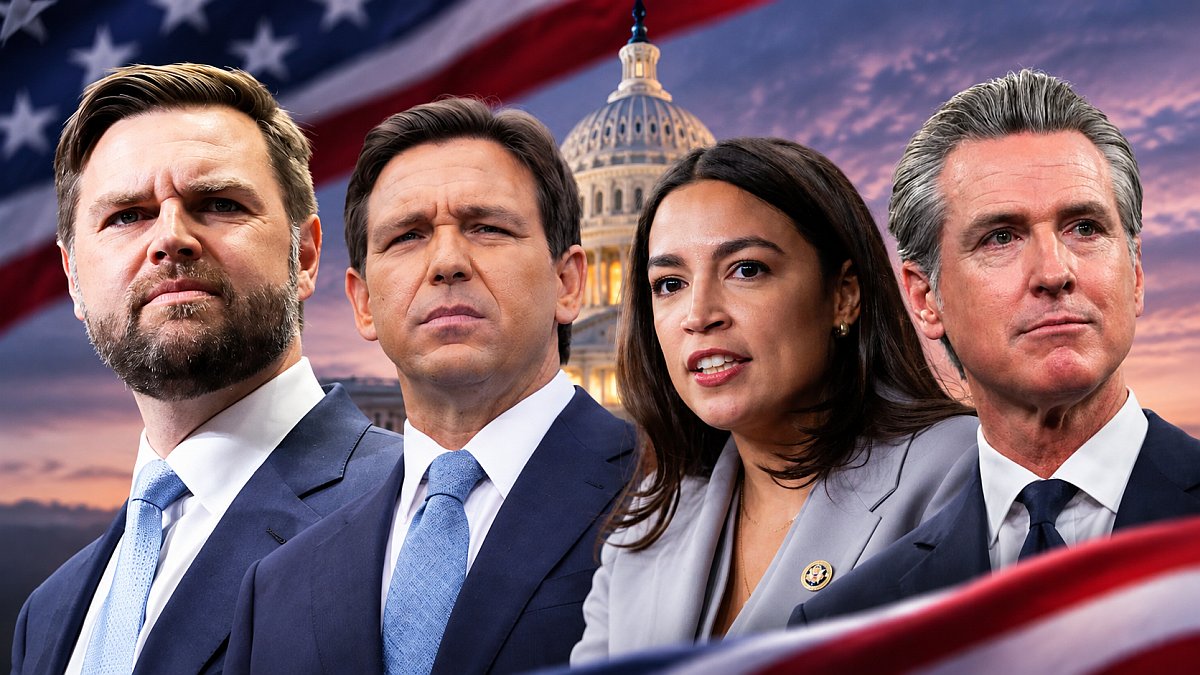
The 2026 midterms did more than hand Democrats control of Congress. Within hours of the results coming in, they also changed the early shape of the 2028 presidential race.
The movement is easiest to see in the prediction markets. Georgia Sen. Jon Ossoff emerged from Tuesday as the biggest Democratic beneficiary, while Vice President JD Vance lost a sizable chunk of his early advantage on the Republican side. Marco Rubio gained ground, Ron DeSantis suddenly returned to the conversation, and Gavin Newsom lost some market share despite an otherwise excellent night for Democrats nationally.
None of this should be confused with a serious forecast of an election still two years away. Candidates have not declared, the political environment will change repeatedly, and early presidential markets can move quickly on relatively little information. What they do provide is a useful snapshot of how traders reassessed the likely contenders immediately after the first major national election of the 2028 cycle.
How the 2028 Markets Moved After the Midterms
| Candidate | Party | Before Midterms | Now | Change |
|---|---|---|---|---|
| Jon Ossoff | D | 15% | 22% | ▲ 7 |
| Gavin Newsom | D | 17% | 14% | ▼ 3 |
| Alexandria Ocasio-Cortez | D | 14% | 14% | No change |
| JD Vance | R | 38% | 28% | ▼ 10 |
| Marco Rubio | R | 19% | 25% | ▲ 6 |
| Ron DeSantis | R | 5% | 18% | ▲ 13 |
Approximate Kalshi nomination-market prices comparing the week before Election Day with Nov. 4, 2026. Prediction-market prices are not polls and can change quickly.
The Republican movement is the most dramatic. Vance remains the early favorite for the GOP nomination, but Kalshi now has him around 28%, down sharply from where he stood before the midterms. Rubio has climbed to roughly 25%, leaving the two separated by only a few points, while DeSantis has gone from a distant afterthought to a meaningful presence in the market. Kalshi’s current 2028 page lists Vance first and Rubio close behind.
The Democratic market has changed in a different way. Rather than a broad reshuffling, most of the movement has gone toward Ossoff. Kalshi currently puts him around 22% for the nomination, while Polymarket has moved even further and prices him around 30%. Ocasio-Cortez remains in the mid-teens, while Newsom has slipped from his pre-midterm position.
Ossoff Got Exactly the Kind of Result a Future Candidate Wants
Ossoff had more at stake Tuesday than most of the other Democrats already being discussed for 2028. He was actually on the ballot in a major battleground state, and Republicans had spent much of the cycle treating Georgia as one of their better opportunities to pick up a Democratic Senate seat.
Instead, Ossoff won reelection as Democrats posted a strong night across Georgia. That gives him something Newsom, Ocasio-Cortez and several other prospective candidates cannot claim from the midterms: a fresh statewide victory in a state that could matter again in a presidential election. The market response was immediate. Kalshi moved him from roughly 15% before the election to about 22% Wednesday, and Polymarket has gone higher still.
There is also a simple political logic behind the move. Presidential primary voters tend to notice candidates who can argue that they have already won difficult races, and Ossoff can now point to another Georgia victory while Democrats elsewhere were making gains across the South. That does not make him the presumptive nominee, but it gives him a stronger argument for entering the race than he had a week ago.
Vance Lost Ground, and the Republican Field Opened Up
Vance remains the most likely Republican nominee according to the markets, but his position looks considerably less secure after the midterms. Kalshi currently has him around 28%, compared with roughly 38% before the election, while Rubio has climbed into the mid-20s.
The reason for the move is not difficult to understand. As the sitting vice president and the most obvious potential successor to President Trump, Vance is more closely associated with the administration’s political fortunes than most of his possible rivals. Republicans losing the House and Senate, along with high-profile statewide defeats in places such as Texas and Ohio, gave traders a reason to reconsider how automatic his path to the nomination really is.
That does not mean Republican voters have rejected him. There has been no primary polling event or campaign failure that would justify such a conclusion. The market is instead pricing more uncertainty into a race that had started to look unusually settled for an election this far away.
Rubio has been the clearest beneficiary among the established alternatives. His Kalshi price has moved from around 19% to approximately 25%, putting him within striking distance of Vance. He was already the strongest alternative on many early boards, and the midterm results strengthened that position without requiring him to have a race of his own on Tuesday.
DeSantis has made an even larger move from a much lower starting point. Kalshi had him around 5% before the election and he has since climbed into the high teens. That should probably be read less as a sudden DeSantis surge than as evidence that traders are reopening the Republican field. Once Vance lost part of his early advantage, money moved toward the two Republicans with the strongest existing national profiles.
Newsom and AOC Did Not Get the Same Midterm Bounce
Tuesday was obviously a good night for Democrats, but that did not translate into higher odds for every potential Democratic presidential candidate. Newsom is the clearest example. His nomination price slipped from roughly 17% to around 14% even as his party took control of Congress.
That is not necessarily a negative judgment on Newsom himself. He simply did not have a result comparable to Ossoff’s to claim as his own. Early markets are often driven by attention, and the midterms shifted that attention toward Democrats who were directly attached to important wins. Newsom remains one of the best-known figures in the prospective field, but he came out of Election Day with more competition than he had going into it.
Ocasio-Cortez was steadier. Her Kalshi number has remained around the mid-teens, leaving her firmly among the leading Democratic possibilities without much evidence that the midterms changed traders’ view of her. That is notable in its own way. Ossoff’s rise did not produce a wholesale collapse in the other leading Democratic names. Most of his gain appears to have come from a broader field that was already highly fragmented.
Tuesday Also Put New Names on the 2028 Board
The more interesting long-term effect of a wave election may be the politicians who were not serious presidential names before it happened.
James Talarico is an obvious example. Winning a U.S. Senate seat in Texas immediately gives him a national profile that would have been difficult to build any other way. He remains a long shot in the 2028 markets, and there is no indication that he is preparing a presidential campaign, but his name now appears in conversations and markets where it barely registered before Tuesday.
The same general point applies to several other Democratic winners. Abdul El-Sayed won a closely watched Senate race in Michigan, while Adam Hamilton’s victory in Kansas instantly made him a national political story. A presidential run by either would still be speculative at this stage, but wave elections have always had a way of creating future candidates by giving previously regional politicians a national audience.
Those names do not belong in the same market tier as Ossoff, Newsom or Ocasio-Cortez. For now, their relevance is simply that the list of Democrats worth watching for 2028 became longer after the midterms rather than shorter.
The 2028 Race Looks Less Settled Than It Did Before Tuesday
The most useful takeaway from the markets is not that they have identified the nominees two years early. They have not. It is that the midterms changed the relative position of several people who were already being discussed as likely contenders.
Ossoff came away with the largest gain among the leading Democrats because he paired a personal victory with a strong Democratic performance in Georgia. Newsom lost some ground, while Ocasio-Cortez held roughly where she was. On the Republican side, Vance remains first but has lost much of the cushion he held before Election Day, allowing Rubio to move closer and DeSantis to reenter the picture.
That is enough to make the early 2028 field noticeably different from the one traders were pricing a week ago. The nominations remain wide open, but Tuesday gave several potential candidates a better starting position and left others with more work to do.
Follow our 2028 Presidential Election Hub for all the latest on 2028 news and candidates.