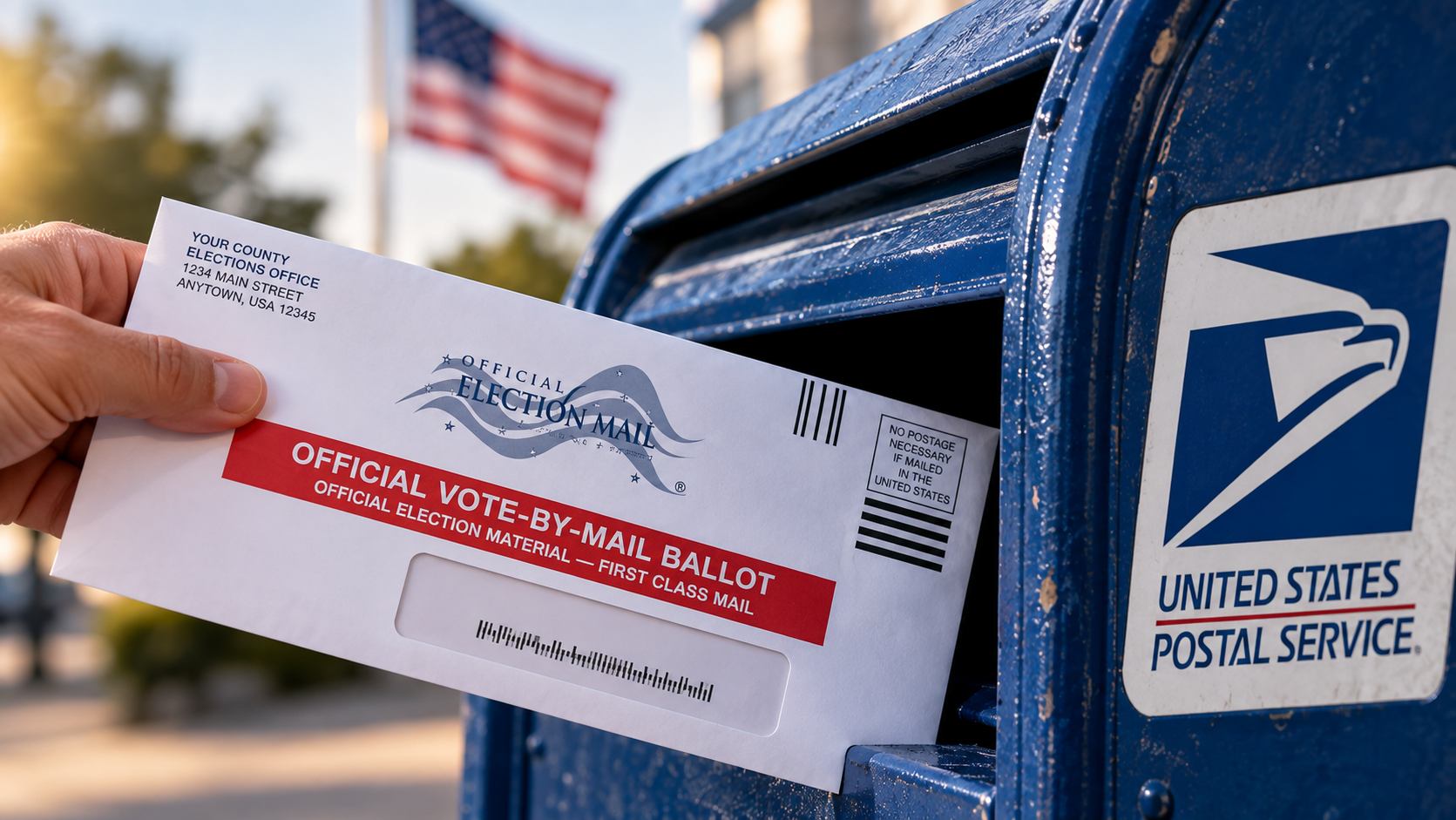
The Trump administration is taking its fight over mail-in voting back to the Supreme Court, asking the justices to allow new Postal Service requirements to take effect before the November midterms. The renewed emergency request, filed Sunday, comes after a federal judge extended a block on the rules just as states begin sending ballots to voters. With Election Day less than two months away, the administration argues that further delays could make the new requirements impossible to implement in time.
The dispute is the latest chapter in Trump’s long-running effort to tighten mail-ballot procedures, a fight that has become one of the most contentious election issues of his presidency. The dispute goes beyond the familiar argument over election security and voter access. The administration is seeking to establish federal requirements for how mail ballots are identified, tracked and processed through the Postal Service, while the states challenging the rule argue that those requirements intrude on their authority to administer elections. The case raises a consequential question: how much authority does the federal government have to impose uniform standards on election mail, particularly when states have already begun preparing ballots under their existing procedures?
What the Administration Wants to Change
The contested Postal Service rule would require states using the mail for federal elections to provide voter information through a federal portal and comply with new ballot-envelope standards, including unique barcodes. The Postal Service would be able to refuse mail ballots that do not meet the requirements. The administration says the measures are reasonable safeguards for election mail, while the states and voting-rights groups challenging them argue that the federal government cannot impose these conditions on state election systems.
U.S. District Judge Indira Talwani issued a preliminary injunction Friday blocking the mandatory portions of the rule for the November 3 election. Her ruling found that the challengers were likely to succeed on claims that the Postal Service had exceeded its statutory authority, and it raised concerns about the consequences of imposing new requirements so close to Election Day. The Supreme Court previously allowed the administration’s plan to move forward at an earlier stage, but it has not issued a final ruling on the legality of the new rule.
The Election Calendar Is Already Moving
Solicitor General John Sauer told the Supreme Court that North Carolina has already begun mailing ballots, Alabama is scheduled to begin September 9, and at least five additional states are expected to start during the week of September 13. He argued that every day the injunction remains in place increases the risk of confusion because states can continue preparing for the new requirements voluntarily, but cannot be compelled to comply.
“Once those ballot envelopes enter the mailstream, there is no retrieving them,” Sauer wrote. The administration is asking the justices to intervene before more states begin distributing ballots under procedures that could later change. The Supreme Court has set a Wednesday deadline for responses to the latest request.
Why the Mail-Ballot Fight Matters
The broader debate is not simply about whether Americans should be allowed to vote by mail (they shouldn’t unless in limited circumstances). It concerns what safeguards should accompany a voting method used by nearly one-third of the electorate, who has authority to establish those safeguards, and how changes can be implemented without interfering with lawful votes. Questions about voter verification, ballot custody and reliable tracking deserve serious attention, particularly when election results may be close and public confidence is already falling.
Election officials already use safeguards that vary by state, but many are designed to make cheating inevitable, and the legal challenge concerns whether the administration’s additional requirements are lawful and workable. The central question before the courts is whether the federal government can impose this particular system through the Postal Service, not whether election security is a legitimate objective.
The administration’s decision to continue the appeal ensures that the issue will remain part of the midterm debate. For voters, the immediate concern is knowing which rules apply in their state and making sure their ballots are returned according to those requirements. For the courts, the question is whether the new federal rules can take effect before November or whether any changes must wait until a later election.
If mail-in ballots are going to remain a major part of federal elections (though they shouldn’t), they deserve stronger scrutiny and safeguards that make the process fair and secure for the broader American electorate. Federal elections do not stop at state lines: the representatives elected in Alabama, California and every other state help determine the direction of the entire country. That makes the case for consistent national standards worth taking seriously, even as the courts decide how far federal authority extends and which requirements Congress or the executive branch may lawfully impose.
Read the Supreme Court filing record and the district court’s preliminary injunction for the underlying legal documents. Follow our 2026 midterm election coverage for more on the November elections.