
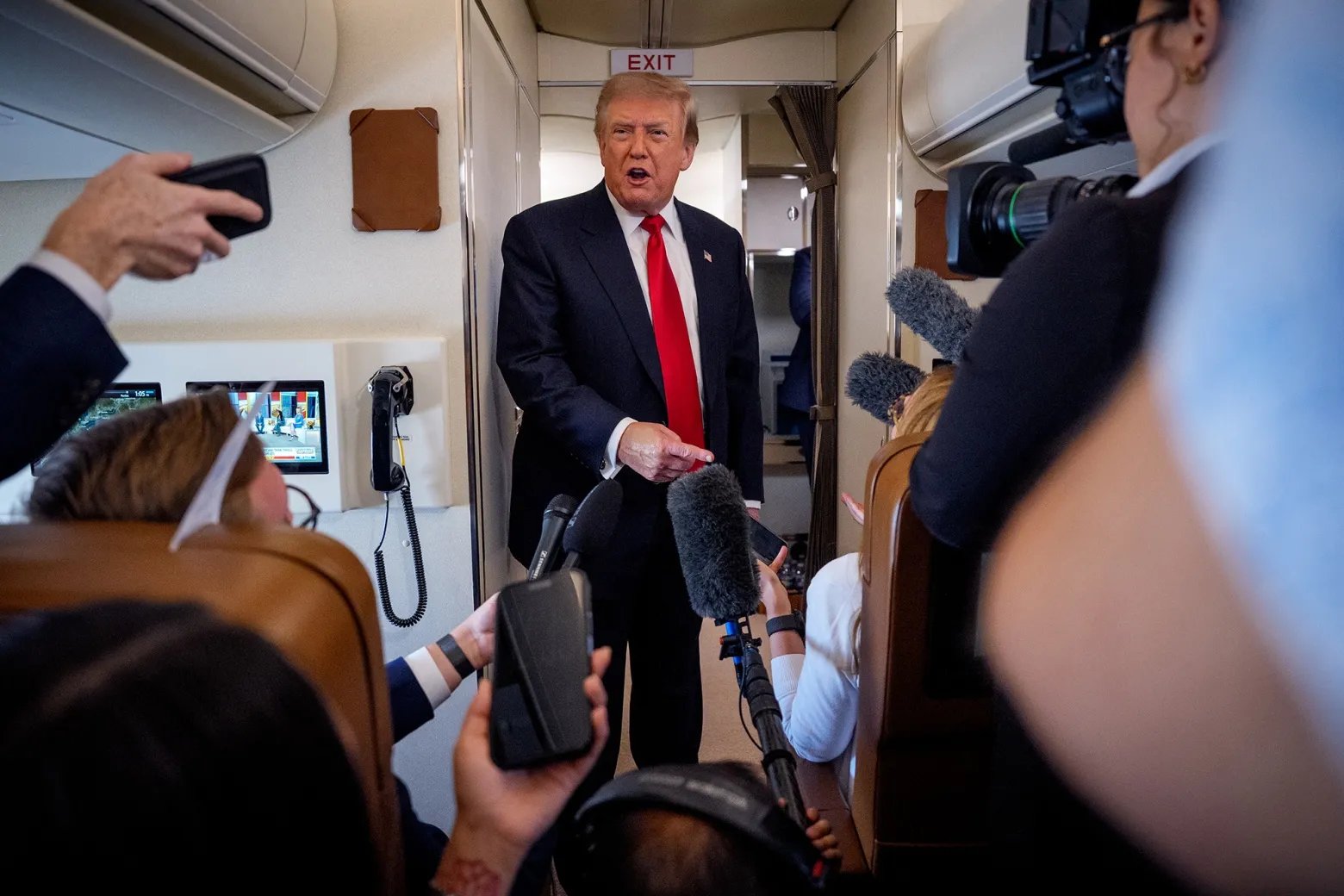
President Trump reportedly grew “exasperated” this week as the war with Iran entered another difficult phase. Behind the scenes, advisers have reportedly argued over the next steps while diplomacy has stalled. At nearly the same time, the U.S. military launched another round of strikes against Iranian targets after Tehran fired missiles toward American bases, underscoring that this conflict is still expanding rather than winding down. Those developments all point to the same question the administration has yet to answer.
How does this end?
That should concern Republicans just as much as Democrats because it goes to the heart of what made Trump’s foreign policy different from the Washington establishment he spent years criticizing. Trump didn’t build the America First movement by promising another long conflict in the Middle East. He built it by rejecting the idea that every foreign policy problem required an open ended military commitment. More than any modern president, he challenged Washington to explain not only why America should fight, but what victory would actually look like.
Nobody disputes that Iran is a dangerous regime. It has spent decades funding terrorist organizations, threatening American forces, and destabilizing the region through proxy groups. The debate was never about whether Iran posed a threat. The debate was whether military action would leave the United States in a stronger strategic position or pull it into another conflict that would prove much easier to start than to finish.
Those concerns weren’t coming only from Trump’s political opponents. Some of the strongest warnings came from within the America First movement itself. Tulsi Gabbard and Joe Kent argued that military action without a clearly defined political endgame carried enormous risks. Their point wasn’t that America should ignore Iran. It was that every military operation should begin with an answer to one simple question: What happens after the first strikes?
That question deserves another look today because events on the ground have not unfolded the way many supporters hoped. Reuters reported that the White House has been searching for what it described as a “face-saving exit” after repeated attempts to secure a ceasefire fell apart. Analysts told Reuters that the administration now faces a series of unattractive choices. Escalating the conflict risks drawing the United States deeper into another regional war. Pulling back without achieving its objectives allows Tehran to claim it outlasted Washington. Neither outcome resembles the swift resolution many Americans expected when the operation began.
The latest military action only reinforces that reality. U.S. Central Command announced another major operation targeting dozens of Islamic Revolutionary Guard Corps sites after Iran launched missiles toward American forces in the region. Militarily, those strikes may have been effective. Strategically, they leave the administration facing the same unanswered question. Destroying targets is not the same thing as achieving a lasting political outcome, and every additional strike raises expectations that Washington can define what success actually means.
Conservatives used to understand that distinction better than anyone. For years Republicans criticized Washington for believing every intervention would be short, limited, and decisive. Iraq was supposed to end quickly. Afghanistan wasn’t supposed to become America’s longest war. The lesson was never that the United States should refuse to use military force. The lesson was that military victories mean very little if they are not tied to a realistic political strategy.
The costs are no longer confined to the battlefield. Fighting around the Strait of Hormuz continues to keep global energy markets on edge because roughly one fifth of the world’s seaborne oil passes through that narrow waterway. Every new escalation raises concerns about supply disruptions, pushes oil prices higher, and increases pressure on gasoline prices here at home. American families may never follow every development in the Persian Gulf, but they notice immediately when it costs more to fill the tank or buy groceries.
That is where this conflict becomes a political problem for the White House. Most Americans did not vote for Donald Trump because they wanted another foreign policy crisis to dominate the news cycle. They voted because they wanted lower prices, stronger economic growth, secure borders, and a government focused on problems at home. Every week spent managing an increasingly complex conflict overseas is another week the administration is forced away from the issues that helped return Trump to office.
None of this means the president should abandon military force when American interests are threatened. America First never meant isolationism, and it never meant accepting aggression from hostile regimes. It meant using American power deliberately, with clearly defined objectives and a realistic plan for bringing conflicts to a close. Those weren’t standards invented by Trump’s critics. They were standards Trump himself championed for years.
The administration still has time to show this conflict will not become another chapter in America’s history of open ended wars. But that answer cannot come in the form of another round of airstrikes or another promise that the next operation will change everything. It has to come in the form of a strategy that explains where this conflict is headed and how the United States intends to leave it behind.
Because after years of asking Washington a question no one wanted to answer, Donald Trump now finds himself facing that same question.
How does this end?