
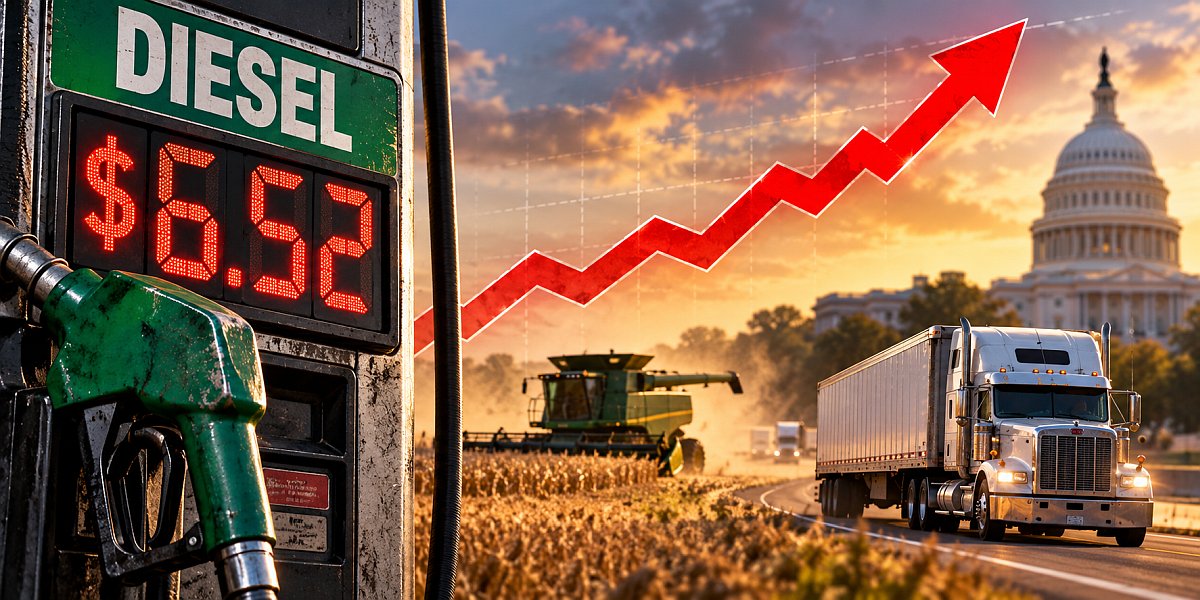
Republicans already have an affordability problem heading into the midterm elections. Now they have a diesel problem, and it is hitting hardest in some of the states they can least afford to lose ground. Diesel remains above $6 a gallon nationally, while the Midwest averaged about $6.53 in the latest federal data.
For farmers, truckers and businesses that depend on heavy equipment, that isn’t just another ugly number on a gas station sign. It flows directly into the cost of harvesting crops, moving freight and eventually putting food and other goods on store shelves. The pressure has become intense enough that Texas has declared a statewide disaster and the Trump administration is now leaning on Europe for emergency supplies.
The White House Is Pressuring Europe for Diesel
The Trump administration has told France and Germany to release emergency diesel reserves to help bring down global fuel prices or potentially face restrictions on U.S. diesel exports, according to Reuters. European governments are now discussing another coordinated release from their emergency stockpiles, with France reportedly proposing a release of roughly 50 million barrels.
Energy Secretary Chris Wright said Thursday he was “highly confident” Europe would release supplies. It is a remarkable position for the administration to be in one month before an American election. Trump returned to office promising lower energy prices, but his administration is now trying to persuade European governments to tap emergency reserves as diesel costs squeeze American farmers, truckers and businesses.
Texas Has Already Declared a Disaster
The scale of the problem became especially clear earlier this week when Texas Gov. Greg Abbott issued a 30-day statewide disaster declaration over soaring diesel prices and fuel shortages. The order expands the use of dyed diesel on Texas roads, relaxes weight restrictions for fuel and agricultural loads and suspends some state diesel regulations. Abbott also asked the EPA to temporarily waive federal fuel requirements in an effort to get more diesel into the Texas market.
“Texas agriculture and freight run on diesel,” Abbott said. “Record prices put both industries at risk and raise costs for every Texas family.” Texas diesel was averaging about $5.86 a gallon when Abbott issued the declaration, according to AAA figures reported by the Texas Tribune. It had been around $3.30 in early February.
The timing carries obvious political implications. Texas is also home to a suddenly competitive U.S. Senate race, adding another affordability headache for Republicans in a state the party normally wouldn’t expect to be worrying about this late in a midterm campaign.
But the Midwest May Be the Bigger Political Problem
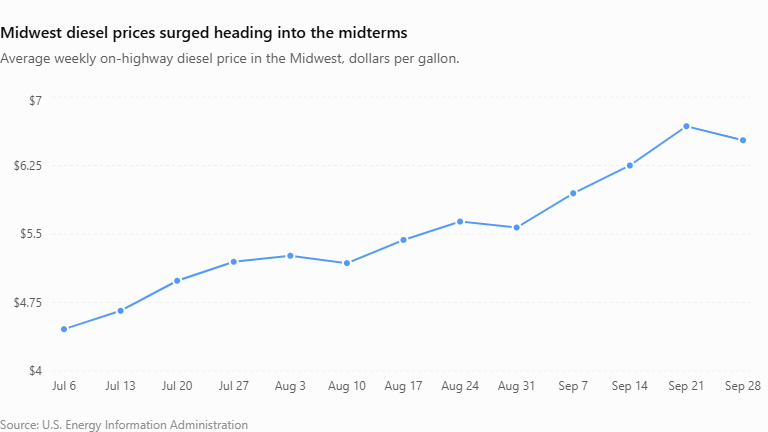
For Republicans, the most difficult part of the diesel crunch may be what is happening across farm country. The latest Energy Information Administration data put Midwest diesel at $6.526 a gallon for the week ending Sept. 28. It was $4.458 on July 6, an increase of more than $2 a gallon, or roughly 46%, in less than three months.
The timing couldn’t be much worse for farmers. Harvest season means combines, tractors, grain trucks and other equipment consuming enormous amounts of diesel, while higher fertilizer prices and other rising input costs have added to the pressure.
Iowa has become one of the clearest political examples. Republican strategists have been sounding alarms about economic conditions in farm country just as the state’s Senate race between Republican Ashley Hinson and Democrat Josh Turek has become unexpectedly competitive. Hinson has called for pausing diesel exports, suspending the gas tax and creating a diesel relief program for farmers and truckers. She has also called for an end to the war with Iran, arguing that Iowans should not have to keep absorbing the resulting costs at the pump.
The latest numbers in that race can be followed on our 2026 Senate polls page.
This Is No Longer Just an Iowa Problem
Senate Majority Leader John Thune has openly identified diesel and affordability as major concerns in the closing weeks of the campaign, specifically pointing to Iowa, Kansas, Nebraska, Minnesota and the broader Midwest. Other states are scrambling too, with Oklahoma, Nebraska, Alabama and North Carolina among those that have relaxed restrictions involving dyed diesel, while additional states have suspended taxes or loosened transportation rules in an effort to reduce fuel costs.
The underlying causes extend well beyond any single policy. The war with Iran and disruptions to Middle Eastern energy supplies have played a major role, while Ukrainian attacks on Russian refineries and tight global refining capacity have added further pressure. There is also disagreement over some of the administration’s proposed solutions. Restricting American diesel exports could increase domestic supply in the short run, but refiners and some energy analysts warn that disrupting established export markets could eventually reduce refinery output or create other price distortions.
A Bad Problem in the Wrong States
That is what makes diesel particularly troublesome for Republicans right now. It is an immediate expense showing up during harvest season in heavily agricultural states, and Republican officials themselves are demanding increasingly aggressive action to bring prices down. Texas has declared a disaster, Iowa Republicans are asking Washington for relief, the White House is considering export restrictions and pressuring Europe to release strategic supplies, and states around the country are suspending fuel rules.
All of it is happening while Republicans are already defending unexpectedly competitive races across Texas, Iowa and other traditionally Republican territory. Diesel prices alone won’t determine what happens in November, but with one month remaining before Election Day, a fuel crisis centered in farm country has become another affordability problem the GOP has to contend with.
Follow our 2026 midterm election coverage for the latest polls, campaign developments and key races heading into November.