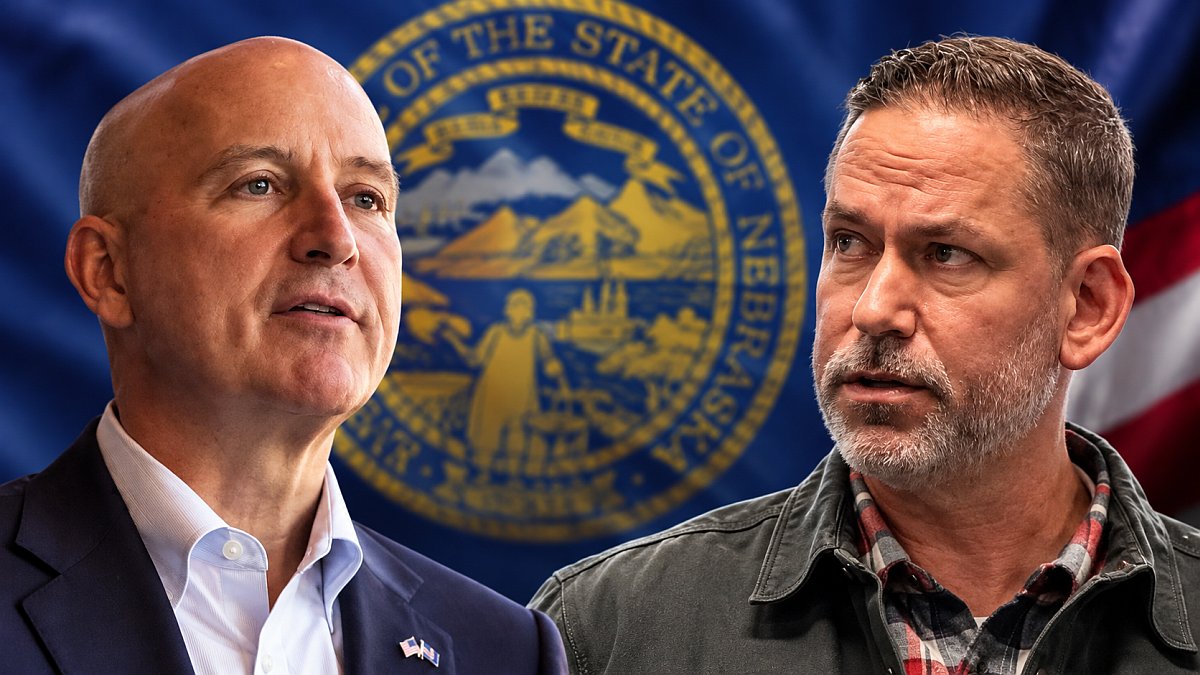
Nebraska is not normally the kind of state where Republicans expect to spend the final month of an election worrying about a Senate seat.
Donald Trump carried the state easily in 2024, Republicans dominate statewide politics and Sen. Pete Ricketts entered the 2026 campaign with all the advantages of an incumbent in a heavily Republican state. Yet with Election Day less than a month away, Ricketts is still dealing with a surprisingly competitive challenge from independent Dan Osborn.
The latest co/efficient poll gives Ricketts a five-point lead, 48% to 43%, but other recent surveys have shown a much tighter race. SurveyUSA had Osborn ahead 46% to 42% in September, while Wedgewood Polls showed Ricketts leading 52% to 48%. The current three-poll average at 270toWin has Ricketts at 46.3% and Osborn at 44.7%.
co/efficient, Oct. 2 (1,113 likely voters, ±2.9)
- Pete Ricketts (R): 48%
- Dan Osborn (I): 43%
SurveyUSA, Sept. 14 (503 likely voters, ±6.4)
- Dan Osborn (I): 46%
- Pete Ricketts (R): 42%
That polling helps explain why Trump was in Grand Island on Monday night campaigning alongside Ricketts. Trump urged Nebraska voters to approach the midterms as though he were personally on the ballot, while Ricketts told the crowd, “We will keep Nebraska red.” Trump also attacked Osborn as a “fake independent.” The Nebraska Examiner reported that thousands attended the rally at the state fairgrounds.
Osborn is already familiar to Nebraska voters. The former union leader ran as an independent against Republican Sen. Deb Fischer in 2024 and lost by less than seven points, a notably close result in a state where Republican Senate candidates have usually had a much easier time. He is again running without a Democratic nominee on the ballot, allowing him to consolidate much of the anti-Republican vote while presenting himself as politically independent.
The unusual matchup also makes the race harder to compare with a traditional Republican-versus-Democrat contest. Osborn has attracted some Republican and Trump voters in past polling, while Ricketts is trying to frame the race around which candidate would support Republican control of the Senate.
There are still reasons to be cautious about reading too much into the numbers. The polling is relatively limited, some surveys have produced very different margins and the newest poll still has Ricketts ahead. But even a race hovering within a few points is noteworthy in a state Republicans normally expect to carry comfortably.
Reuters described the Nebraska stop as part of Trump’s effort to shore up Republican candidates in states that were not expected to demand much attention earlier in the cycle.
For Ricketts, the immediate task is simply making sure Nebraska votes more like Nebraska usually does. For Osborn, keeping the race close into October is already enough to force Republicans to spend time and attention in a place they would much rather have considered settled.
Follow the latest numbers on our 2026 Senate polls page and visit our 2026 Senate elections guide for more races around the country.