
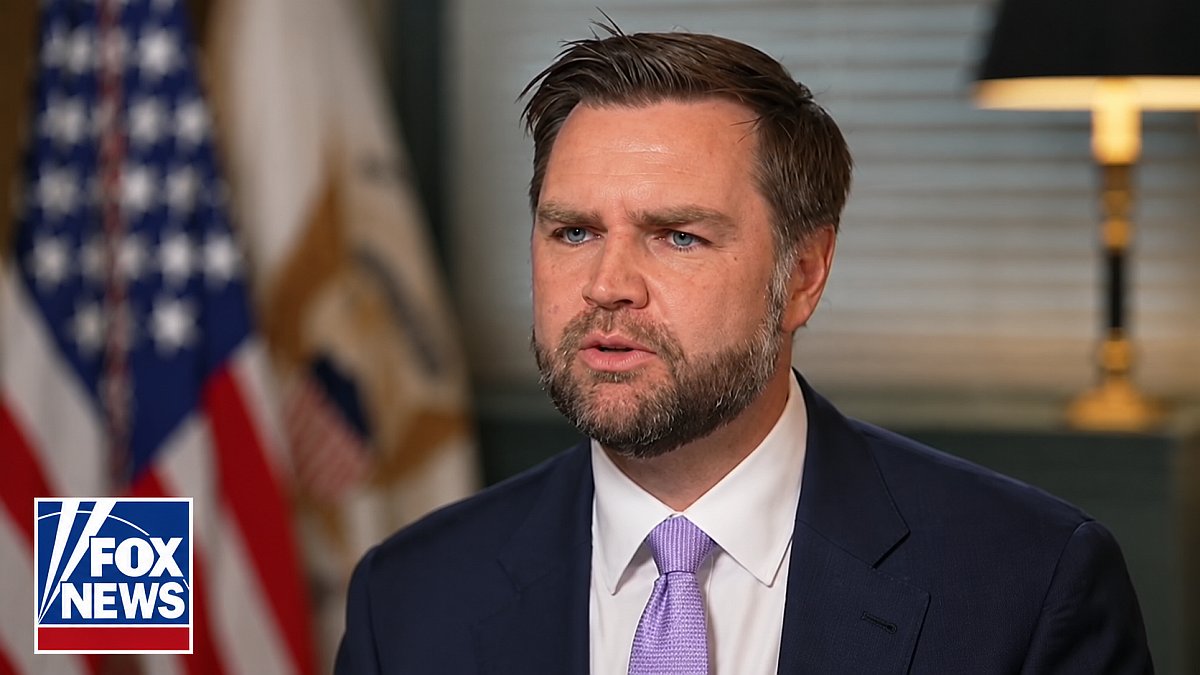
Vice President JD Vance still is not ready to say he is running for president in 2028, but he has now put a timetable on when Republicans should expect an answer.
In an interview with Laura Ingraham on Fox News, Vance said he expects to make a decision sometime in 2027. He also acknowledged that the practical demands of a presidential campaign mean he cannot simply wait until the eve of the Iowa caucuses to make up his mind. Fox News posted the interview clip Monday night.
“I haven’t made a decision. We’ll figure it out sometime next year,” Vance said. He added that presidential campaigns require fundraising, organization and other infrastructure that have to be built well before voting begins. When Ingraham pressed him on whether he was leaning one way or another, Vance said that once he makes the call, he will be “all in” on whatever decision he reaches.
Vance Is Still the Early Leader
The timing matters because the Republican field is already beginning to move around him. Ted Cruz has privately told conservative economist Stephen Moore that he plans to run, according to Reuters, and other Republicans including Ron DeSantis and Glenn Youngkin continue to consider campaigns of their own. We looked at Cruz’s preparations yesterday in our 2028 Republican update.
For now, Vance remains at the top of the early Republican polling. A new Echelon Insights survey conducted Nov. 12 through Nov. 16 found Vance at 40% among Republican and Republican-leaning voters, followed by Marco Rubio at 26% and DeSantis at 12%. Cruz registered 1% in the same survey. Echelon released the poll on Nov. 17.
The survey included 1,027 registered voters in what Echelon described as the likely electorate, with a margin of error of plus or minus 3.7 percentage points for the full sample. The Republican primary question was asked of 397 Republican and Republican-leaning respondents, so the uncertainty around that subgroup is larger than the overall margin of error. Still, it provides another snapshot showing Vance with a sizable early advantage while the field remains unsettled.
Why Wait Until 2027?
There is an obvious political reason not to rush. Vance is the sitting vice president and remains one of the most visible figures in the Trump administration. Declaring a campaign too early would immediately change how nearly every public appearance, policy disagreement and administration decision is interpreted.
At the same time, waiting too long creates its own problems. A serious presidential campaign needs donors, state organizations, consultants, ballot access teams and staff in Iowa, New Hampshire, South Carolina and other early states. Vance made that point himself in the interview, saying that the infrastructure required for a presidential run has to be assembled well before the first votes are cast.
That makes 2027 a logical decision point. It gives Vance time to see how the Trump administration recovers from the Republican midterm losses while still allowing enough runway to build a formal presidential campaign if he chooses to run.
The Midterms Changed the 2028 Conversation
Before the midterms, much of the Republican discussion around 2028 treated Vance as the natural successor to Donald Trump. The scale of the GOP losses changed that assumption. Potential challengers have become more willing to discuss running, while Republicans have started debating what parts of the Trump coalition should carry forward after the president leaves office.
Vance has also had to navigate some of the issues Republicans blamed for the defeat, particularly the war with Iran and higher energy costs. In the same Fox interview, he defended the administration while continuing to argue that the war should not become a prolonged American commitment. The Washington Post reported that Vance has been trying to balance his loyalty to Trump with his own long-standing skepticism of extended foreign conflicts.
That debate is likely to become part of the 2028 primary if Vance runs. Cruz has been positioning himself closer to a traditional Republican foreign-policy and economic approach, while Rubio remains popular with many GOP voters even as people familiar with his thinking have suggested he may not enter the race.
For Now, Vance Is Waiting
The important distinction is that Vance has not announced a campaign. He has now gone further than simply refusing to discuss the race, however. He has acknowledged that a decision is coming, and that it will have to come early enough to build the machinery required for a national campaign.
That puts 2027 on the calendar as the year when the Republican race could move from speculation to actual campaigns. Cruz appears to be preparing. DeSantis and Youngkin remain possibilities. Rubio continues to draw interest from donors. Vance, meanwhile, remains the early polling leader and has now told Republicans when they should expect to learn whether he intends to use that position.
Follow the developing field on our 2028 Republican Primary page, track the latest numbers on our 2028 Presidential Polls page, and see the full list of potential contenders in our 2028 Presidential Candidates directory.