
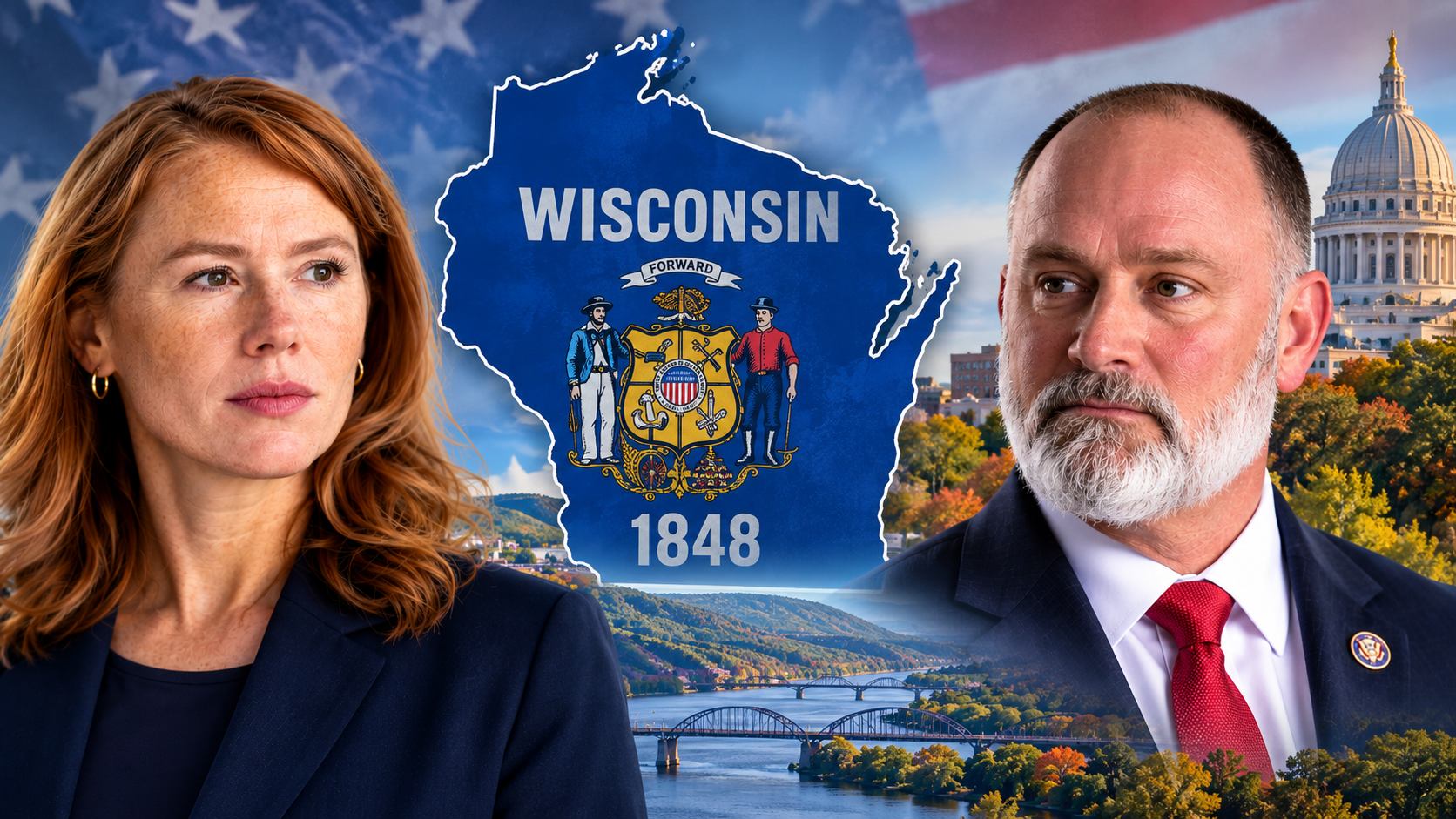
There are easier places to understand American politics than western Wisconsin. There may not be many better ones.
Wisconsin’s 3rd Congressional District has voted for Barack Obama, Donald Trump and a long-serving Democratic congressman. It flipped to Republicans in 2022, stayed Republican by a narrow margin in 2024, and is now headed for a rematch between Rep. Derrick Van Orden and Democrat Rebecca Cooke.
The race is only one of 435 House contests on the ballot this November. But it has most of the ingredients shaping the 2026 midterms: a close district, an incumbent closely tied to Trump, a Democratic challenger trying again after a narrow loss, and voters who keep telling both parties that they should not be taken for granted.
Van Orden and Cooke, Again
Van Orden and Cooke have already done this once. In 2024, Van Orden won 212,064 votes to Cooke’s 200,878, a margin of 11,186 votes. That worked out to about 51.4% for Van Orden and 48.6% for Cooke.
Cooke came back this year and won the Democratic primary in August, defeating former Eau Claire City Council President Emily Berge and setting up another November contest with Van Orden. Van Orden, seeking a third term, was unopposed in the Republican primary.
The rematch matters because the district has not behaved like a safe seat for either party. Democrat Ron Kind represented the area for more than two decades before retiring ahead of the 2022 election. Van Orden then flipped the open seat for Republicans.
At the presidential level, the movement has been just as interesting. Obama carried the district twice. Trump carried it in 2016, 2020 and again in 2024. Yet Van Orden ran several points behind Trump in the district in 2024, leaving Democrats convinced there is still room to compete.
Van Orden Is Not Running Away From Trump
One of the clearer differences in this year’s House battlefield is how Republican candidates are handling Trump in competitive districts. Some have tried to keep a little distance. Van Orden is not doing that.
He appeared onstage this week at the Republican Midterm Convention in Dallas, making him one of the relatively few Republicans from closely contested races to take part prominently in the event. During his appearance, Van Orden promoted the Republican tax agenda and stood firmly with the president.
That was not an accidental choice. Van Orden has long been one of Trump’s more vocal allies in Congress, and Trump has endorsed him. Rather than treating the president as something to navigate around, Van Orden appears comfortable making the Trump record part of his case for another term.
Cooke is betting that the same relationship can be used against him. Her campaign has tried to tie Van Orden to the administration on economic policy, health care and other issues where Democrats believe voters may be looking for a change.
That makes the district a useful place to watch one of the larger questions hanging over the Republican campaign: whether Trump’s ability to turn out voters in presidential elections can carry over to a midterm when his own name is not on the ballot.
The Race Is About More Than Trump
For all the national attention, the issues voters are hearing about in western Wisconsin are considerably more ordinary.
Affordability has become one of the biggest arguments in the race. In an August interview with WEAU, both candidates acknowledged the financial pressure facing families in the district. They differed sharply over what caused it and what Washington should do about it.
Health care is another major fault line. Cooke has made access and costs a central part of her campaign, while Van Orden has defended the Republican approach and argued that broader economic growth and changes in federal policy offer a better path.
Immigration remains part of the debate as well, but even an issue such as artificial intelligence has taken on a distinctly local character. Large data-center projects have raised questions about electricity demand, land use and local infrastructure. Cooke has called for a federal pause on new large-scale projects until stronger rules are in place.
Those are the kinds of issues that make a House race difficult to reduce to a national referendum. Trump matters. Party control matters. But so do electric bills, farm income, health-care costs and whether voters believe their representative is paying attention to the district.
A District That Keeps Moving
Western Wisconsin has changed politically over the past decade, especially in rural areas that once gave Democrats much more support. Trump’s rise accelerated that shift and helped Republicans make gains across counties where Democrats had once relied on union households and working-class voters.
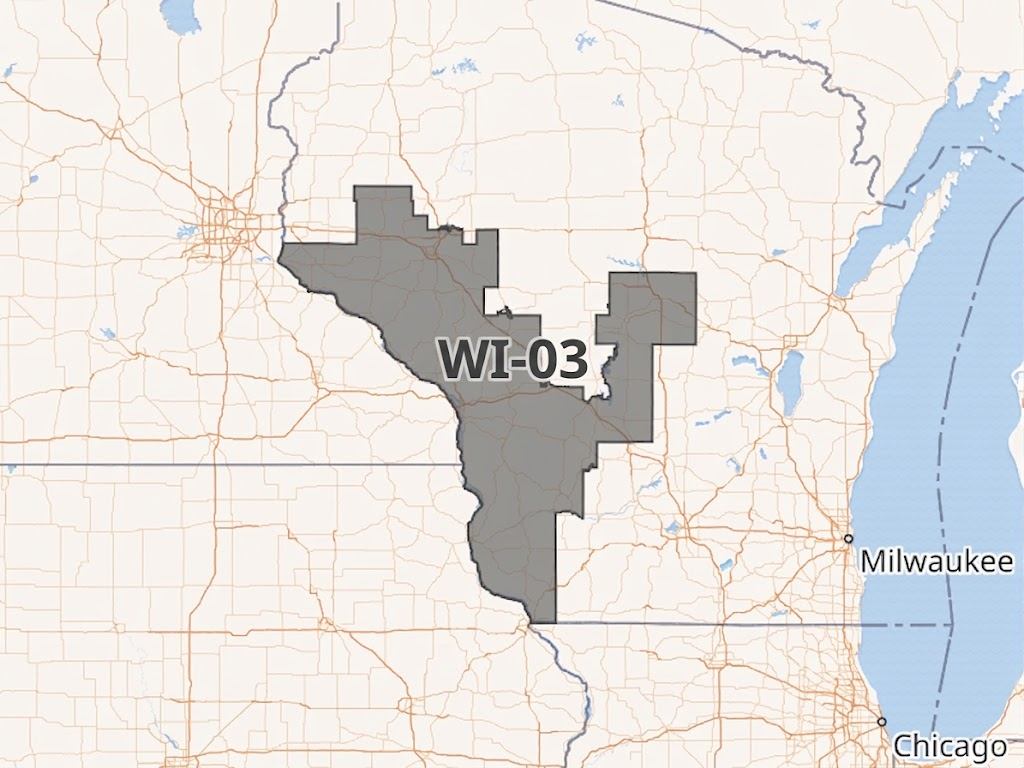
At the same time, places such as Eau Claire and La Crosse give Democrats a base, and the district still contains enough voters willing to split their tickets to keep the race competitive.
That is part of what makes the 2024 result so useful. Trump carried the district by a larger margin than Van Orden did, while Cooke came within roughly 11,000 votes of defeating the incumbent. The result suggested that some voters were willing to support Trump at the top of the ticket without automatically voting Republican all the way down.
Both parties now have to figure out what those voters do in a midterm.
Why National Parties Care
Republicans hold a narrow House majority, and Democrats need only a small number of gains to change control of the chamber. Reuters recently identified Wisconsin’s 3rd District as one of the races worth watching in that fight, part of a relatively small group of genuinely competitive House contests around the country.
That guarantees money, advertising and outside attention will keep flowing into western Wisconsin over the final weeks of the campaign. It also means a race that is fundamentally about one congressional district will repeatedly get pulled into much larger national arguments.
Van Orden will try to make the case that Republican control has delivered results and that voters should stay the course. Cooke will argue that two terms are enough and that the district needs a different representative.
Neither side has to invent reasons to believe the race can be close. They already have the numbers from 2024.
Western Wisconsin Gets Another Turn
The easiest way to describe Wisconsin’s 3rd District is as a battleground, but that word can make these races sound more exotic than they are.
Most voters are not spending their weekends thinking about control of the House. They are thinking about prices, schools, jobs, health care, farms and whether Washington is making life easier or harder.
Trump will be part of the argument. So will control of Congress. But Van Orden and Cooke already faced each other once, and only 11,186 votes separated them.
Now western Wisconsin gets to do it again.