
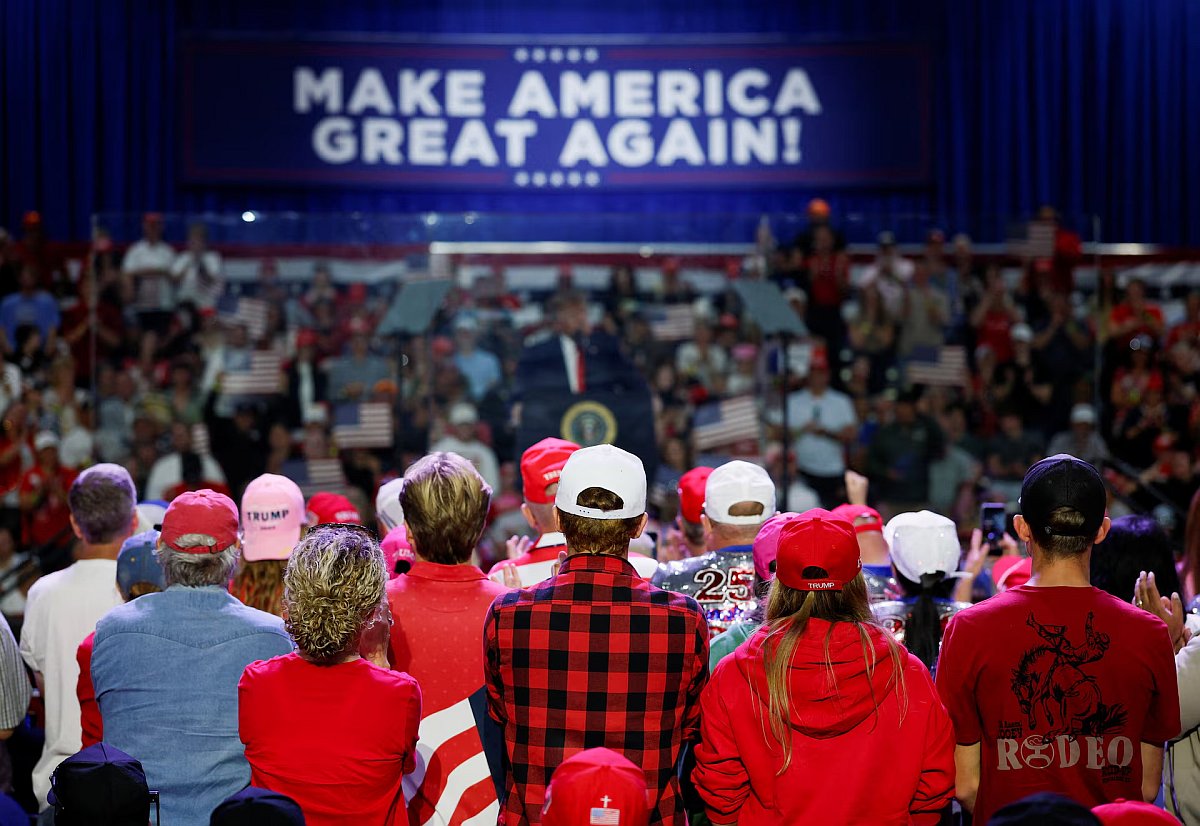
President Trump has abruptly canceled his final weekend rallies in Kansas and Iowa, replacing both appearances with a last-minute blitz of telephone events aimed at reaching Republican voters across nearly 20 states.
The official explanation is straightforward: Trump and the Republican National Committee say tele-rallies allow him to cover much more ground in the final days before Election Day. But the cancellations are also raising questions inside Republican circles about whether Trump’s lengthy in-person rallies are still helping candidates in close races as much as the White House insists.
Kansas and Iowa Are Both Off the Schedule
Trump had been scheduled to campaign Saturday in Salina, Kansas, for Republican Sen. Roger Marshall, followed by a Sunday rally in Dubuque, Iowa, where Republicans are trying to hold several competitive congressional seats and the open U.S. Senate seat.
- Kansas: Salina rally scheduled for Saturday, Oct. 31 — canceled
- Iowa: Dubuque rally scheduled for Sunday, Nov. 1 — canceled
- Replacement: Trump plans more than 20 tele-rallies before Election Day
Trump told reporters Thursday that he did not “feel I have to go to Kansas,” saying Marshall was doing well. The RNC later confirmed the Iowa event had also been dropped, saying the switch would maximize Trump’s ability to speak directly to voters around the country. Reuters reported that Trump has already held 25 rallies across 19 states since Oct. 1.
Republicans Are Giving Different Explanations
Some Trump allies say the shift is simply about efficiency. A White House official told Scripps News that Trump views the rallies as a major reason Republican enthusiasm has improved and believes his appearances have helped change the trajectory of several races.
Not everyone in the party agrees. A national Republican strategist told Scripps that Trump’s low approval ratings make his impact much more complicated, while a former Trump campaign official described growing anxiety inside the White House about the midterm environment. Scripps reported that some Republicans see strong enthusiasm among Trump’s base but question whether repeated appearances help with the swing voters deciding close races.
That concern is not entirely new. A Reuters review earlier this month found that many Republican candidates in the closest races were deliberately creating some distance from Trump, particularly on issues where his approval ratings are weak.
Trump’s Rallies Have Become a Complicated Asset
The White House argues that Trump’s main value is turnout. Many of the voters who supported him in 2024 are less reliable in midterm elections, so bringing Trump into Republican areas gives campaigns a chance to collect supporter information, energize volunteers and remind occasional voters to participate.
But the same rallies also put Trump at the center of races where Republicans would sometimes prefer to talk about local issues, affordability or their own records. CNN reported earlier this month that Trump had largely stayed away from some contests where Republican candidates were trying to establish more distance from him, including Susan Collins’ Senate race in Maine. CNN’s reporting said Trump advisers recognized that his presence would not necessarily be useful everywhere.
The Associated Press has also noted that Democrats have openly welcomed Trump’s heavy rally schedule, arguing that his appearances remind voters unhappy with the president that the midterm election is effectively a referendum on his administration. Republicans counter that no other figure in the party can generate comparable enthusiasm among GOP voters. AP examined that divide this week.
There Is Also the Simple Question of Exhaustion
Trump has spent October traveling at an unusually aggressive pace, with today’s Daytona Beach appearance still on the schedule despite the weekend cancellations. He acknowledged Monday in Mississippi that his voice was strained, telling supporters that people are not built to do a rally every day.
That immediately fueled speculation that the cancellations were connected to fatigue or health, something Trump strongly denied Thursday. “I feel perfect,” he told reporters when asked about the change, and the White House continues to say the switch to tele-rallies is strategic rather than health-related.
The Timing Is What Makes This Interesting
Kansas and Iowa are not states Republicans can simply ignore this year. Marshall is locked in a much closer Senate contest than Republicans expected, while Iowa has competitive Senate, governor and House races that could affect control of Congress.
So the cancellations do not necessarily signal panic, and there is no evidence that Trump was ordered off the campaign trail because Republicans concluded his rallies were hurting them. What they do show is a significant tactical change at the last possible moment while Republicans continue debating how much Trump’s presence helps, or hurts, in races that may be decided by only a few points.
Trump is still campaigning in person today, Friday, Oct. 30, with a rally scheduled in Daytona Beach, Florida, before the campaign shifts to its weekend tele-rally blitz. Watch Trump’s Daytona Beach rally live here.
Follow the latest changes on our Trump rally schedule.