
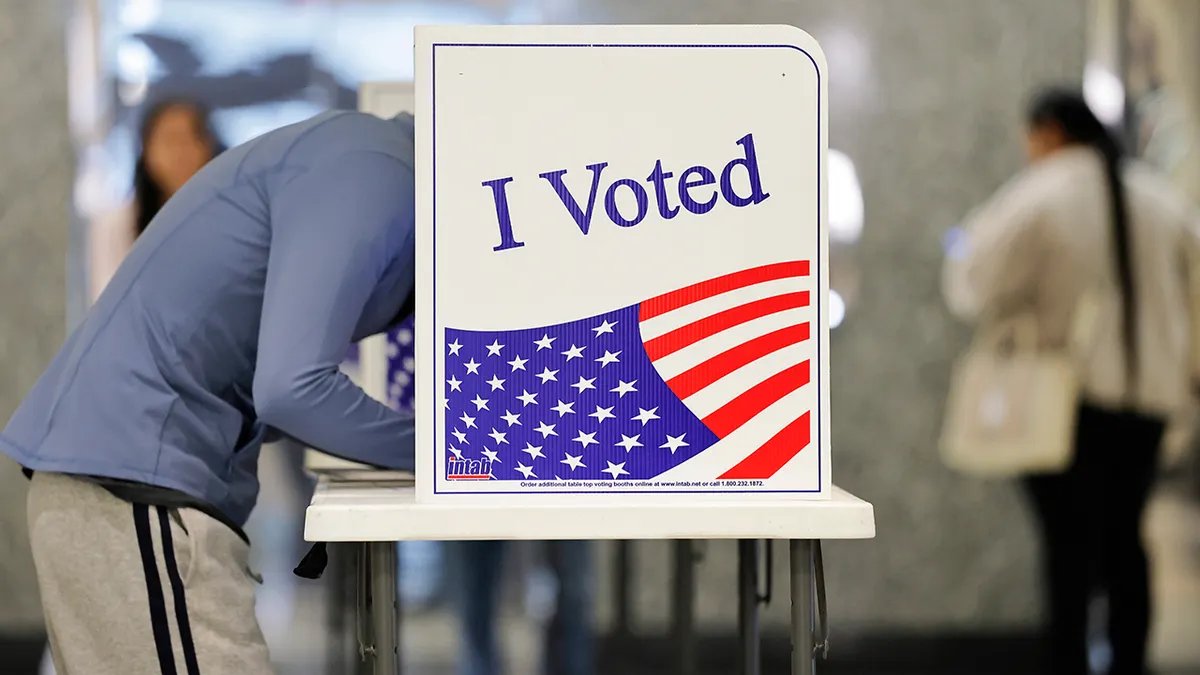
Republicans have spent the days since the midterms debating what went wrong, and Vice President JD Vance offered one of the clearest explanations. In a lengthy post on X, Vance argued that Republicans did not primarily lose because their voters stayed home. They lost because some of the people who voted for Donald Trump and Vance in 2024 turned around and voted for Democrats two years later.
Vance put the war with Iran at the top of the list, followed by inflation and the cost of living, frustration with foreign policy and a sense that the administration had drifted from its “America First” promises. The war unquestionably hurt Republicans. But the exit polls and voter surveys suggest the election was broader than any single issue.
When voters were asked directly what mattered to them, they described an electorate unhappy with prices, skeptical of tariffs, frustrated by the war, uneasy about immigration enforcement tactics, concerned about government corruption and increasingly hostile toward the administration’s priorities. Artificial intelligence and data centers, an issue that barely registered in national politics a few years ago, also became a surprisingly potent source of discontent.
In other words, there is no need to rely on pundits to explain the blue wave. The voters left a fairly detailed record themselves.
The Economy Was Still the Biggest Problem
The simplest explanation for the Republican defeat is also the most familiar one: voters still did not feel good about the economy.
Early CBS exit polling found roughly three-quarters of voters dissatisfied with the direction of the country, with more voters describing themselves as angry than in 2024. Trump’s job approval was around 38%, an unusually weak number for a president heading into a midterm election. Roughly six in ten voters said Trump himself was a factor in their House vote. The CBS exit poll also found voters were more negative about the economy than they had been two years earlier.
The AP Voter Poll showed the same basic picture. About two-thirds of voters said Trump’s policies had made the economy worse, and roughly eight in ten of those voters supported Democratic House candidates. Inflation was not an abstract economic statistic for these voters. They were talking about grocery bills, gasoline, utilities, health care and major household expenses. The AP voter poll found that even in Republican strongholds such as Texas, voters reporting severe or moderate inflation hardship broke heavily toward Democratic candidates.
That is important because Trump won in 2024 partly by convincing voters that he could bring prices down. Two years later, many of the same economically frustrated voters were judging his party on whether that promise had been delivered.
The Iran War Hurt, but Voters Were Worried About More Than the War
Vance is on firmer ground when he argues that the war with Iran was politically damaging. The ABC News Voter Poll found 34% of House voters described the war as “crucial” to their vote. But that was still below the 49% who said the cost of living was crucial and the 55% who said government corruption was crucial. ABC’s analysis found voters were focused on a wider set of economic concerns than gasoline alone.
The war also blended into the affordability problem. Higher fuel and transportation costs made an already difficult cost-of-living environment worse, giving voters little reason to separate foreign policy from their household finances. Fox’s voter survey found that when voters were forced to choose between resuming military action and ending U.S. involvement to bring gasoline prices down, nearly twice as many preferred ending the involvement.
So Vance’s argument is not wrong so much as incomplete. Iran mattered, but the election data does not show millions of voters entering the booth with one issue in mind. It shows voters who were already unhappy with the economy and then saw the war as another decision that made their lives more expensive.
Tariffs Became Part of the Affordability Backlash
Tariffs were another administration policy that looked much better politically in theory than they did in the exit polling. The Fox voter poll found about two-thirds of voters believed Trump’s tariffs had hurt the national economy, with nearly as many saying they had hurt their own local economy. Only about two in ten said the tariffs had helped nationally.
Voters were also much more likely to blame Trump’s policies for higher prices than to blame forces outside his control. That is a particularly damaging finding for Republicans because it means voters were not simply unhappy about inflation. They assigned responsibility for it.
Trump’s economic message in 2024 had been straightforward: prices were too high, Biden was responsible and Trump would fix it. By 2026, Republicans were defending tariffs and a prolonged foreign war while asking voters to remain patient on prices. The exit polling suggests a substantial number of voters were no longer willing to do that.
There Was Also a Broader Problem With Trump’s Priorities
The economic numbers alone do not explain everything. Voters also appeared increasingly convinced that the administration was spending time on things they did not care about while neglecting the things they did.
The AP Voter Poll found roughly two-thirds of voters believed Trump did not have the right priorities. More than half said government corruption was crucial to their congressional vote, slightly more than the share who said the cost of living was crucial. The same survey found many voters thought Trump was more focused on his personal interests than theirs.
The White House ballroom became an obvious symbol of that disconnect. The ballroom itself was not what cost Republicans Congress, and no serious reading of the exit polls would suggest otherwise. But while families were telling pollsters they were worried about groceries, health care, power bills and gasoline, Trump had spent much of his second term promoting an elaborate White House construction project financed through donations from corporations and wealthy supporters.
The contrast became even harder to miss the day after the election, when Trump brought reporters to the ballroom construction site and spent much of the appearance discussing its design while Republicans were still sorting through one of their worst election defeats in years. AP reported that the appearance came as voters were telling pollsters the president was focused on the wrong issues.
For voters already convinced Washington was disconnected from their daily problems, projects such as the ballroom could reinforce an existing impression even if they were not decisive issues on their own.
AI and Data Centers Became a Political Liability
Artificial intelligence may have been the most underestimated issue of the election. The administration spent much of the past two years promoting AI investment and rapid data-center construction as an economic and national-security priority. But voters were considerably more skeptical. A pre-election USC survey found nearly one-third of Americans ranked AI and data centers among the three most important issues facing the country, behind only inflation and political polarization. Seventy-six percent said government was doing too little to regulate AI, while 77% said the same about data centers.
Job anxiety was part of that reaction. A Reuters poll found half of Americans feared AI could threaten employment in their household, while 77% worried data centers would raise electricity prices. Pew found 71% of Americans expected AI to lead to fewer jobs, while only 5% expected it to create more. Pew’s survey showed those concerns rising sharply during 2026.
That creates an obvious political problem. Washington leaders were talking about the enormous potential of AI while many ordinary voters were hearing that the same technology could eliminate jobs and raise electric bills in their communities.
The election results suggest that divide was real. The Fox voter poll found about three-quarters of voters opposed having a new data center built in their community. Voters who opposed local data centers backed Democratic House candidates by 28 points, while voters who supported them backed Republicans by 45 points. Among rural voters, opposition to nearby data centers ran roughly three to one.
The issue also showed up directly on the ballot. According to AP reporting, 44 of 45 completed local referendums involving data-center restrictions passed, while many winning gubernatorial candidates had campaigned for stronger oversight or outright pauses on new construction.
Texas Shows Why the Election Cannot Be Explained by One Weak Candidate
The Texas results are particularly useful because they remove one of the easiest explanations for Republican losses. Ken Paxton was a controversial Senate nominee, and Republicans could plausibly argue that his defeat to James Talarico reflected candidate quality. Greg Abbott was a very different case. He was a three-term governor with an enormous campaign account, a long record of statewide victories and no history of losing general elections.
He lost too. Democrat Gina Hinojosa defeated Abbott with about 53% of the vote, becoming the first Democrat elected governor of Texas since Ann Richards. The result was part of a much broader Democratic sweep of statewide offices. Texas Tribune described it as a political earthquake.
That makes Texas a useful case study because Abbott’s defeat cannot reasonably be blamed on one bad Senate candidate or one unusual scandal. The state itself moved sharply against Republicans.
Abbott Had a National Problem and a Texas Problem
The national environment was already working against Abbott. An October Marist poll found Trump’s approval among likely Texas voters underwater at 46% to 54%. Forty-three percent said their family finances had gotten worse during the previous year, compared with only 18% who said they had improved.
Abbott nevertheless maintained advantages on several traditional Republican issues. That is what makes the result more revealing. He did not lose because Democrats suddenly became more trusted on border security or crime. He lost in an environment where broader dissatisfaction with prices and the governing party overwhelmed many of those traditional advantages.
He also had vulnerabilities of his own, particularly in rural Texas. Abbott had aggressively promoted Texas as the future “epicenter of AI development,” but large data-center projects became increasingly unpopular in communities worried about electricity prices, water usage and rapid development.
The Texas Tribune documented Republican voters in rural counties turning against Abbott over the issue. Some said data centers had become more important to their vote than party identification. Abbott eventually moved to impose stronger restrictions, but by then many voters blamed him for helping create the problem in the first place.
Hinojosa had another opening with public education. Abbott had spent years fighting to create a private-school voucher program and had helped defeat rural Republican legislators who opposed it. The voucher fight left lingering resentment in communities where public schools remain central institutions and private-school options are limited.
Hinojosa tied those issues together with a much simpler economic argument. She talked about electricity bills, public schools, household costs and whether large corporations were receiving preferential treatment from state government. Abbott was defending an eleven-year record at the same time voters were looking for someone to blame for conditions they disliked.
Latino Voters Also Moved Back Toward Democrats
Republicans had made major gains with Latino voters in 2024, particularly in Texas, but some of those gains proved less durable than they appeared. Economic concerns were part of the movement, but immigration enforcement also mattered. National surveys found a majority of voters believed the administration’s enforcement efforts had gone too far, even while Republicans retained an advantage on the issue of immigration itself.
AI and data centers intersected with those concerns as well. A pre-election survey of Latino voters found 74% worried AI would take jobs away from ordinary people, while 74% worried data centers would drive up electricity bills. Nearly four in five wanted stricter rules governing where data centers could be built. Latino polling showed those concerns extending even to Republican Latino voters.
That combination helps explain why Texas moved so dramatically. Republicans had built recent gains among working-class Latino voters by emphasizing wages, prices, immigration and cultural issues. By 2026, many of those same voters were evaluating Republicans on whether their own lives had actually improved.
Did Trump Voters Really Switch Parties?
This is where Vance’s post-election explanation needs the most qualification. Vance argued that Republican turnout was not the primary problem and that large numbers of Trump-Vance voters had instead voted Democratic. There is evidence of real crossover. CNN’s voter data found Democratic Senate candidates in Texas, Ohio, Iowa, Kansas and South Carolina winning roughly one in ten voters who said they had supported Trump in 2024.
But national data suggests turnout composition also mattered considerably. Preliminary NORC findings reported by The Washington Post found only about 7% of 2024 Trump voters backed Democrats nationally in 2026. Trump voters made up 38% of the midterm electorate, while Harris voters made up 43%. Another 15% had not voted in 2024, and those voters favored Democrats 59% to 36%.
So both things happened. Republicans lost some voters who had supported Trump in 2024, particularly in the battleground Senate states, but the electorate itself was also different. Democratic voters were highly motivated, some Trump voters stayed home, and voters who had skipped the presidential election entered the midterm electorate with a strong Democratic lean.
That is a more complicated explanation than either “Republicans failed to turn out” or “Trump voters became Democrats.” The blue wave required elements of both.
The Exit Polls Point to a Broad Rejection, Not One Issue
The Iran war clearly mattered, and Vance is right to include it in any serious Republican postmortem. But the voter data does not support treating the war as the sole explanation for what happened.
Voters were unhappy with the cost of living and blamed administration policies for making it worse. They viewed tariffs negatively, worried about health-care and energy costs, questioned the direction of immigration enforcement and increasingly saw AI and data-center development as something happening to their communities rather than for them. Many also believed Trump was spending too much time on his own priorities while Congress failed to provide enough oversight.
Texas brought nearly all of those pressures together. Abbott was not an unknown or obviously weak candidate. He was one of the most established Republican governors in the country, with money, organization and more than a decade in office. He still lost because the electorate moved against his party while state-specific fights over public schools, data centers and affordability weakened parts of the coalition that had kept Texas reliably Republican for decades.
The lesson in the exit polling is therefore less dramatic than some of the post-election rhetoric, but probably more useful. Republicans did not lose because of one war, one candidate or one turnout problem. They lost because enough voters looked at the economy, Trump’s priorities and the direction of the country and decided they wanted something different.