
Labor Day is over, ballots are beginning to move and the 2026 midterm campaign has entered its final stretch. With Election Day set for November 3, the battle for control of Congress is increasingly coming down to a relatively small collection of states and congressional districts where neither party can afford many mistakes.
The House margin is especially tight. Democrats need a net gain of just three seats to reclaim the chamber, while Republicans are trying to defend a narrow majority across a map in which only a fraction of the nation’s 435 districts are truly competitive. The Senate presents a different challenge: Democrats need a net gain of four seats, forcing them to defend their own vulnerable territory while finding multiple opportunities on Republican ground.
Not every competitive race can fit on one list, and New Hampshire voters are still choosing Senate nominees in tonight’s primary. But with the post-Labor Day campaign underway, these eight contests offer a useful snapshot of where the fight for Congress stands right now.
Senate: North Carolina — Roy Cooper vs. Michael Whatley
North Carolina may be one of Democrats’ clearest opportunities to take a Republican-held Senate seat. Republican Sen. Thom Tillis is retiring, leaving former Democratic Gov. Roy Cooper to face Republican Michael Whatley, the former Republican National Committee chairman and a close Trump ally.
Cooper enters the race with an unusual political résumé for a Democrat in a state Donald Trump carried in both 2016 and 2020: he won two terms as governor during the same period. Whatley has spent years in Republican politics but has never previously been elected to public office, making the contest a battle between a familiar statewide figure and a candidate closely tied to the national GOP.
For Democrats trying to find four Senate pickups, North Carolina is difficult to avoid. Losing here would put considerably more pressure on them to win in states that have historically been even tougher territory.
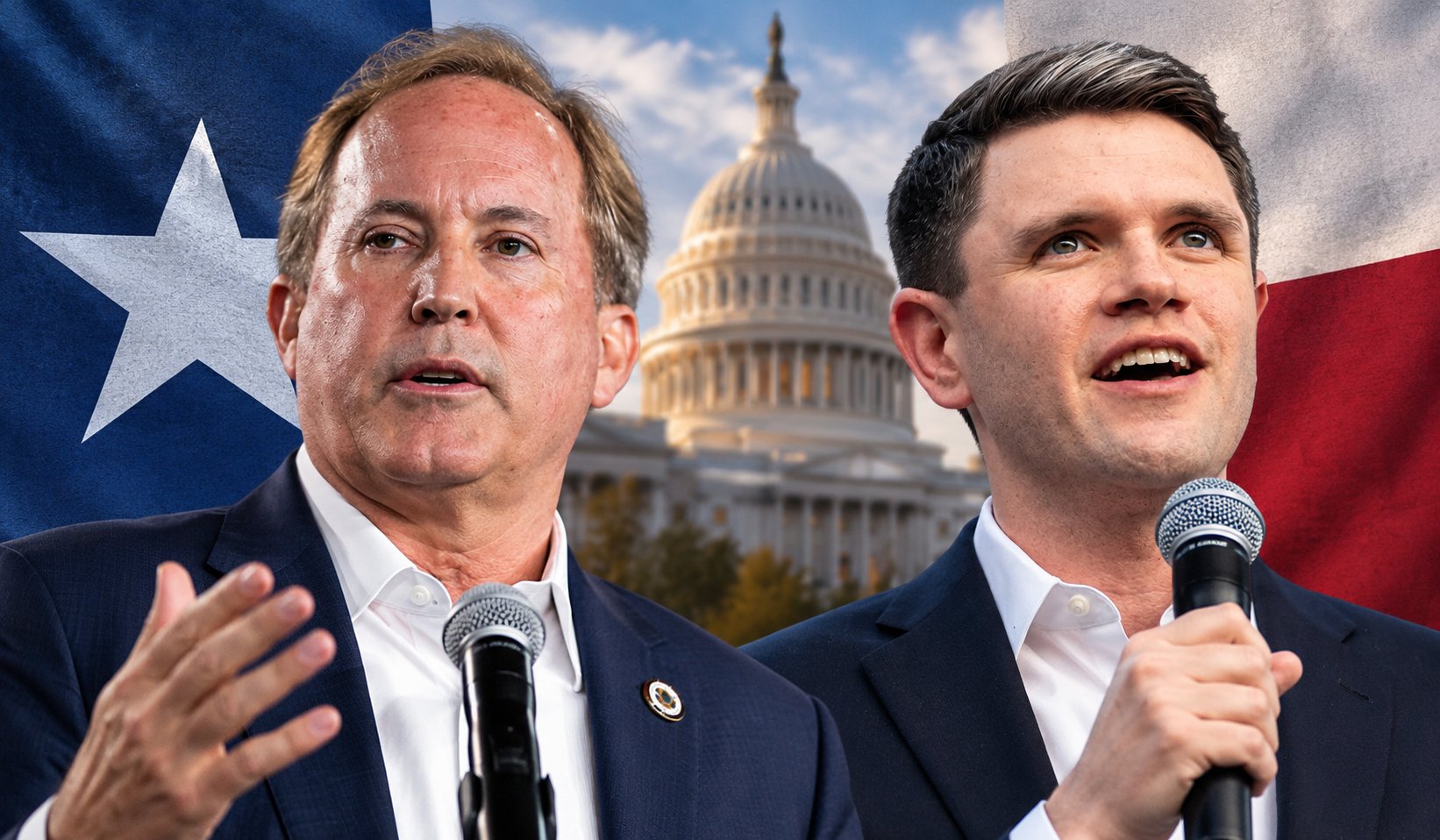
Senate: Texas — Ken Paxton vs. James Talarico
Texas was not supposed to consume this much Republican attention. Attorney General Ken Paxton defeated longtime Sen. John Cornyn in the Republican primary and now faces Democratic state Rep. James Talarico in a race that has attracted a surprising amount of national money and attention.
Paxton brings a long record of winning statewide elections and a strong following among conservative voters, but he also enters the general election after years of legal and ethical controversies. Talarico, meanwhile, defeated Rep. Jasmine Crockett for the Democratic nomination and has built a formidable fundraising operation. The race became important enough that Trump’s MAGA Inc. political operation recently committed $10 million to advertising supporting Paxton, its first major general-election spending move of the midterms.
Texas has not elected a Democratic U.S. senator since 1988, so history still matters here. But the fact that national Republicans are spending heavily to protect the seat tells its own story about how much the 2026 Senate map has changed.
Senate: Michigan — Mike Rogers vs. Abdul El-Sayed
Michigan has an open Senate seat after Democratic Sen. Gary Peters decided not to seek another term. Republican Mike Rogers, who came within roughly 20,000 votes of winning a Senate seat in 2024, is back for another attempt and faces Democratic nominee Abdul El-Sayed.
El-Sayed narrowly emerged from a bruising Democratic primary over Rep. Haley Stevens, leaving Democrats with the task of reuniting the party after an expensive ideological fight. Republicans, seeing an opportunity, have increased their investment behind Rogers. The Senate Leadership Fund has committed tens of millions of dollars to the state, according to the Associated Press.
Michigan is also a useful test of several national issues at once, including tariffs, manufacturing, the economy and Trump’s continued strength with working-class voters. Democrats have held this Senate seat for decades, but neither party is treating that history as a guarantee in 2026.
Senate: Georgia — Jon Ossoff vs. Mike Collins
Democratic Sen. Jon Ossoff is seeking a second term in a state that has become one of America’s most persistent political battlegrounds. His Republican opponent is Rep. Mike Collins, giving the GOP another chance to reclaim a Senate seat Democrats captured during Georgia’s political shift earlier this decade.
Ossoff won his seat in the January 2021 runoff that helped give Democrats control of the Senate, but Georgia subsequently backed Trump in the 2024 presidential election. That makes Ossoff one of the Democratic incumbents Republicans have a strong incentive to target rather than simply playing defense elsewhere.
The arithmetic matters. Democrats cannot build a Senate majority merely by finding Republican seats to flip; they also have to prevent Republicans from taking seats they already hold. Georgia is one of the races where those two strategies collide.
House: Arizona’s 1st District — Amish Shah vs. Jay Feely
An open seat in the northern Phoenix suburbs has produced one of the year’s more unusual congressional matchups. Democrat Amish Shah, an emergency-room physician and former state legislator, faces Republican Jay Feely, the former NFL kicker who won a crowded GOP primary.
Arizona’s 1st District has developed into the kind of suburban battlefield that both parties have spent years trying to crack. Feely embraced Trump’s endorsement during the Republican primary but has also emphasized that he would not simply serve as a presidential rubber stamp. Shah, meanwhile, is trying to build on his previous experience representing part of the area in the state legislature.
There is no incumbent advantage here, which makes the seat particularly valuable. In a House where Democrats need only three net pickups, an open suburban district can matter every bit as much as one of the better-known incumbent races.
House: California’s 22nd District — David Valadao vs. Randy Villegas
Republican Rep. David Valadao has survived close elections before, but California’s Central Valley is presenting him with another difficult test. He faces Democrat Randy Villegas in a district shaped by agriculture, a large Latino electorate and California’s newly redrawn congressional map.
Valadao has long relied on a somewhat independent political identity, including his vote to impeach Trump after January 6. Yet the national political environment is increasingly difficult to separate from local congressional races, particularly as Democrats attempt to connect vulnerable Republican incumbents to administration policies on health care and the economy.
California is especially important because Democratic-led redistricting has created opportunities for the party to gain several seats from Republicans. If Democrats make the gains their mapmakers intended, districts like Valadao’s could provide a substantial part of the three-seat net pickup they need nationally.
House: New York’s 17th District — Mike Lawler vs. Cait Conley
Republican Rep. Mike Lawler has made a political career out of surviving difficult territory in New York’s Hudson Valley. This year his Democratic challenger is Cait Conley, an Army veteran and former White House national security official who won a competitive June primary.
Lawler has tried to maintain a degree of separation from the national Republican brand when local interests demand it, including his push for a higher federal deduction cap on state and local taxes. Conley is attempting to turn the district’s underlying Democratic lean into a congressional pickup while portraying Lawler as more closely aligned with Trump than his moderate image suggests.
The seat is precisely the sort Democrats need if they are going to regain the House: suburban, competitive and currently held by a Republican despite having supported the Democratic presidential ticket in 2024. Lawler’s history of outperforming expectations, however, is why Republicans have not conceded anything here.
House: Iowa’s 1st District — Mariannette Miller-Meeks vs. Christina Bohannan
If the names look familiar, they should. Republican Rep. Mariannette Miller-Meeks and Democrat Christina Bohannan are facing each other for the third time in Iowa’s 1st Congressional District, and their last meeting was exceptionally close.
Miller-Meeks defeated Bohannan by just 799 votes in 2024. Now they return for another race in southeastern Iowa as economic concerns involving agriculture, tariffs, fuel costs and health care become central campaign issues across the state. Iowa has trended strongly Republican in presidential politics, but several of its congressional districts remain much more competitive.
Few races better illustrate why tiny movements in turnout can determine control of the House. When a congressional contest was decided by fewer than 800 votes two years ago, neither party needs much explanation for why it is spending time and money there again.
Why These Eight Races Matter
The battle for Congress does not hinge on a single state or one national trend. Republicans can lose ground in one part of the map and compensate somewhere else, while Democrats face the opposite problem: gaining Republican-held seats will do little good if they simultaneously lose vulnerable seats of their own.
The Senate map makes that especially clear. Democrats need four net gains, and their opportunities now extend from North Carolina and Maine to states such as Texas, Ohio, Alaska and Iowa. At the same time, Republicans are pressing Democrats in Michigan, Georgia and New Hampshire. The Associated Press reported Tuesday that what once looked like a relatively secure Republican Senate majority has developed into a much broader fight.
The House is even less forgiving. Reuters identified only about 50 genuinely competitive races nationwide, yet Democrats need to move just three seats from the Republican column to their own. Arizona suburbs, California’s newly drawn districts, New York’s Hudson Valley and closely divided Midwestern seats like Iowa’s 1st could therefore carry influence far beyond their district boundaries.
There are still nearly eight weeks of campaigning left, and today’s New Hampshire primary will add another important Senate matchup to the board. But the traditional post-Labor Day sprint has begun, and from this point forward every debate, advertising blitz, candidate mistake and turnout operation in these battlegrounds becomes more consequential.
Election Day is Tuesday, November 3, 2026. Follow our 2026 Midterm Elections, Senate and House coverage as the campaign moves toward November.