
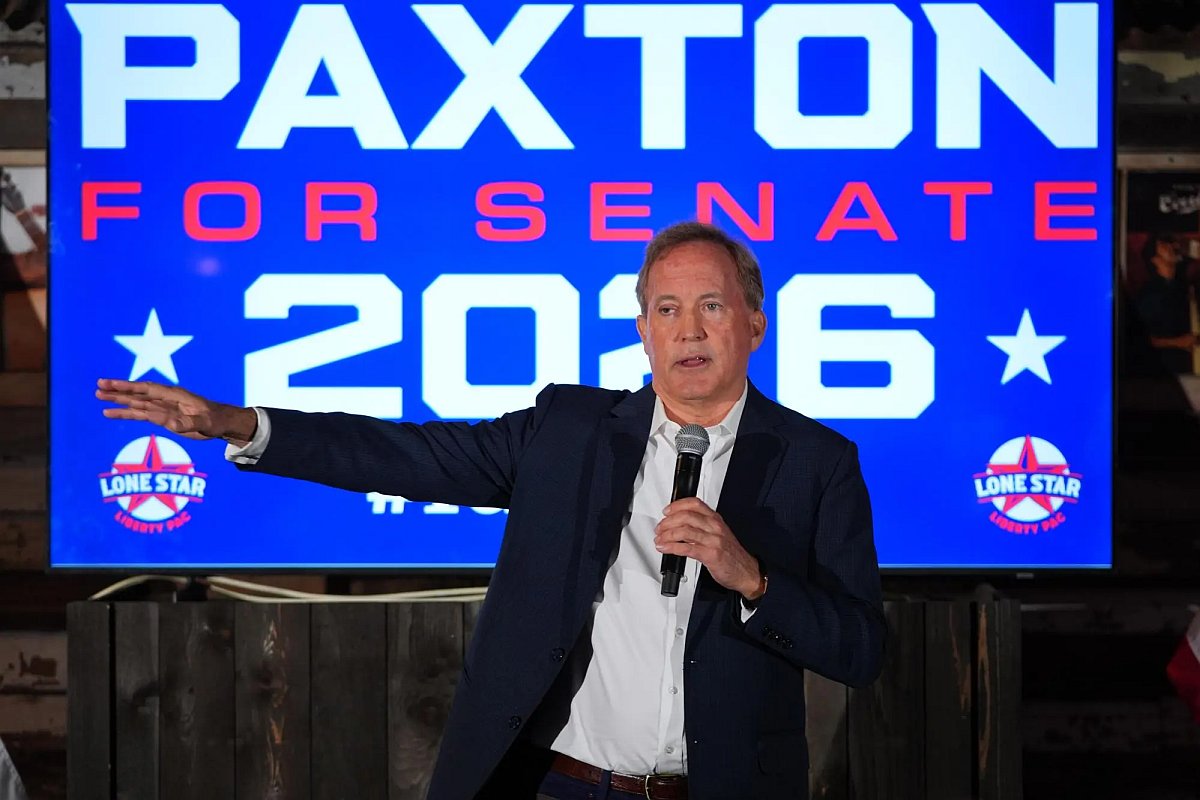
For years, Democrats have been told that Texas is finally about to turn blue. They pour in money, national reporters descend on the state, polls tighten, and Republicans are warned that this might finally be the election when decades of GOP dominance come crashing down. Then Texans vote, Republicans win statewide, and Democrats begin talking about next time.
There are plenty of reasons to believe 2026 will end the same way. Donald Trump carried Texas by more than 13 points just two years ago, and Democrats have not won a U.S. Senate election there since 1988. But Republicans would be making a mistake if they used that history to ignore what is happening in the race between Attorney General Ken Paxton and Democratic state Rep. James Talarico, because right now the numbers are considerably more uncomfortable than they should be.
Most recent polls have shown Talarico with a small advantage, although many of those leads remain within the margin of error. An August University of Texas/Texas Politics Project poll had Talarico ahead 42 percent to 39 percent, while an Emerson College survey taken around the same time had Paxton ahead 47 percent to 46 percent. The Texas Tribune’s running poll tracker says most surveys since the May Republican runoff have given Talarico a slight advantage.
That doesn’t mean Texas is turning blue. It does mean Republicans have managed to turn what should have been a relatively comfortable Senate defense into a real race. On Aug. 20, the Cook Political Report moved Texas from Lean Republican to Toss Up, one of several ratings changes that led Cook to conclude that control of the Senate itself is now a Toss Up.
Republicans Chose Paxton
This was exactly what Sen. John Cornyn and much of the Texas Republican establishment warned primary voters could happen. Cornyn had held the seat since 2002 and would almost certainly have entered the general election as a heavy favorite. But Republican voters had grown tired of the longtime senator, and Paxton offered them an opportunity to throw out an incumbent they increasingly viewed as part of the Washington establishment.
The primary became nasty and expensive. Cornyn narrowly finished first in the initial March contest, but Paxton crushed him when the smaller and more conservative runoff electorate returned in May, winning by 28 points. Republican voters heard the establishment’s warnings about electability and decided they wanted Paxton anyway.
There is nothing inherently irrational about that choice. Political parties do not exist simply to protect incumbents for life, and Republican voters had every right to decide that Cornyn no longer represented what they wanted from their senator. The GOP establishment spent millions trying to persuade them otherwise, and the voters delivered a rather emphatic answer.
Now comes the part where Paxton has to prove them right.
Paxton Is Getting Buried in the Money Race
The most alarming numbers for Republicans may not be the polls. They’re the dollars. Talarico raised roughly $30 million during the second quarter compared with about $9 million for Paxton, and the Texas Tribune reports that Talarico has raised more at this stage than any Texas general-election candidate in the past decade.
The advertising disparity has been even more extraordinary. By Aug. 20, Talarico had spent more than $25 million on advertising since the general election began, while Paxton had spent only a tiny fraction of that amount. At one point, Democrats were outspending Republicans by more than 200-to-1 on advertising, essentially giving Talarico the Texas airwaves to himself for much of the summer.
That finally began changing last week. Republican spending surged past Democratic spending during the week of Aug. 25, outside groups began placing ads, and Trump traveled to Houston on Thursday for a fundraiser that included Paxton. National Republicans clearly understand that they cannot allow a Democratic Senate candidate to spend the entire summer defining himself and his opponent without answering.
But the fact that this rescue operation is necessary at all should bother Republicans. Texas is expensive, but it is also a state Trump won by double digits. The party should not need the president, national committees and outside groups riding to the financial rescue of its Senate nominee two months before Election Day.
Cornyn Is Trashing Paxton Publicly
If Paxton needs help, don’t expect much of it to come from the man he defeated. Cornyn told the Texas Tribune that he intends to use his formidable donor network to raise money for Republican Senate candidates in places like Michigan, New Hampshire and Alaska. Texas, apparently, can figure itself out.
Cornyn says he remains a good Republican, opposes Talarico’s policies and supports the Republican ticket. Then he talks about Paxton like a man who has been waiting several months for someone to ask what he really thinks. “Paxton’s a poor campaigner,” Cornyn told the Tribune. “He’s lazy and doesn’t raise money.” He added that Paxton is making the race harder than it needs to be and warned that it is shaping up to be a close election that he hopes does not become “disastrous.”
Those are extraordinary comments from the sitting Republican senator whose seat Paxton is trying to inherit. Cornyn also complained that Paxton’s camp has done little to reach out to what he called “mainstream traditional Republicans” after the bruising primary. A person close to Paxton disputed that characterization, telling the Tribune that Paxton has repeatedly reached out to Cornyn and has been met with silence.
And here is where the story gets more interesting than another round of “Texas might turn blue” speculation. Cornyn may be completely right about Paxton’s weaknesses, but he is hardly a neutral observer. Republican primary voters just fired him after he and much of the Texas GOP establishment spent months warning them that nominating Paxton could put a safe Republican Senate seat at risk.
There Is Some “We Told You So” Happening Here
Cornyn insists he wants Republicans to keep the seat, and there is no reason to believe he wants James Talarico serving in the United States Senate. But come on. Paxton humiliated the establishment in May, and three months later Cornyn is watching his former opponent trail in several polls, struggle to raise money and depend on Trump and outside groups to help close the gap. If there isn’t at least a little “we told you so” mixed into Cornyn’s frustration, it would be remarkable.
A Paxton defeat would also deliver exactly the lesson the Republican establishment spent the primary trying to teach its voters. You were angry at the longtime incumbent. You ignored the warnings about electability. You nominated the insurgent anyway. And then, the argument would go, you handed Democrats a Senate seat in Texas.
That would be a powerful message well beyond this election. Republican voters have spent the Trump era becoming increasingly willing to disregard party leaders, major donors and elected officials who tell them which candidates are “electable.” If Paxton loses a seat Cornyn likely would have won comfortably, establishment Republicans will point to Texas for years as evidence that primary voters sometimes punish the party along with the incumbent.
There is another side to that argument, of course. The Republican establishment does not get to spend a primary telling voters they have the final say and then sulk when voters make the wrong choice. Paxton won the nomination by 28 points. At some point, Republicans who genuinely believe Talarico would be bad for Texas have to decide whether proving themselves right about Paxton matters more than keeping the Senate seat.
Paxton Can Make the Establishment Look Foolish
The easiest way for Paxton to end this entire argument is also the most obvious: win. If he overcomes the fundraising disadvantage, beats Talarico and keeps Texas red after the establishment spent months warning Republican voters that he couldn’t do it, Paxton gets to be the one saying “I told you so.” Primary voters will have reason to conclude that the people insisting they couldn’t afford to dump Cornyn were protecting an incumbent rather than protecting the seat.
Paxton also has advantages that should not be understated. Texas remains a Republican state, Trump is actively helping him, national GOP money is beginning to arrive, and Republicans still have plenty of time to define Talarico before early voting. The Supreme Court’s recent decision eliminating limits on coordinated party spending also gives national Republicans considerably more flexibility to help a candidate who has struggled to keep pace financially.
Paxton’s allies argue that voters simply haven’t focused on the general election yet. Once Republicans begin spending heavily against Talarico, they believe the Democrat’s record will become the issue rather than Paxton’s fundraising. That theory is about to get tested, because the cavalry has finally started arriving.
Democrats Have Seen This Movie Before
There is one enormous reason for Republicans not to panic: Texas has been political fool’s gold for Democrats for years. Every few election cycles, the ingredients seem to line up. The state’s demographics are changing, Democratic fundraising explodes, national attention arrives and polling suggests the Republican advantage is finally disappearing.
Then Election Day comes. Beto O’Rourke raised staggering amounts of money and came within 2.6 points of Ted Cruz in 2018, producing the closest Texas Senate race in decades. Six years later, Democrats again convinced themselves Cruz was vulnerable, only to watch him defeat Colin Allred by more than eight points in 2024. Close races and encouraging summer polls have not yet translated into a Democratic statewide breakthrough.
Talarico may be a stronger candidate than Republicans expected, and he certainly has more money than Paxton would like. But he still has to persuade Texas voters to do something they have refused to do for more than three decades: elect a Democrat to the United States Senate. That remains a very high wall to climb.
But Republicans Are Taking an Unnecessary Risk
The difference this year is that some Republicans seem determined to make Talarico’s job easier. Cornyn is supporting the ticket while publicly calling its Senate nominee lazy. Major Republican donors who backed Cornyn have been slow to come aboard. Paxton spent much of the summer allowing his Democratic opponent to dominate the airwaves, and national Republicans are now spending precious resources in Texas that they would surely rather deploy in Michigan, Georgia, North Carolina or Maine.
Maybe none of it matters. Maybe Texas voters look at the choice in October, remember why they have consistently rejected Democrats statewide, and come home to the Republican Party just as they did in the close Senate races before this one. If that happens, Paxton will have survived both Talarico and a Republican establishment that never particularly wanted him there in the first place.
But if the establishment remains lukewarm, Talarico keeps raising money and those polling numbers don’t break toward Republicans, 2026 could produce the kind of Texas stunner Democrats have been predicting for years. The irony would be hard to miss. Republican primary voters threw out the establishment senator because they wanted Ken Paxton, and the establishment warned them they would regret it.
If Paxton wins, the voters get the last laugh. If he loses a U.S. Senate seat in Texas, John Cornyn will not have to say “I told you so.” Everyone will already know.