
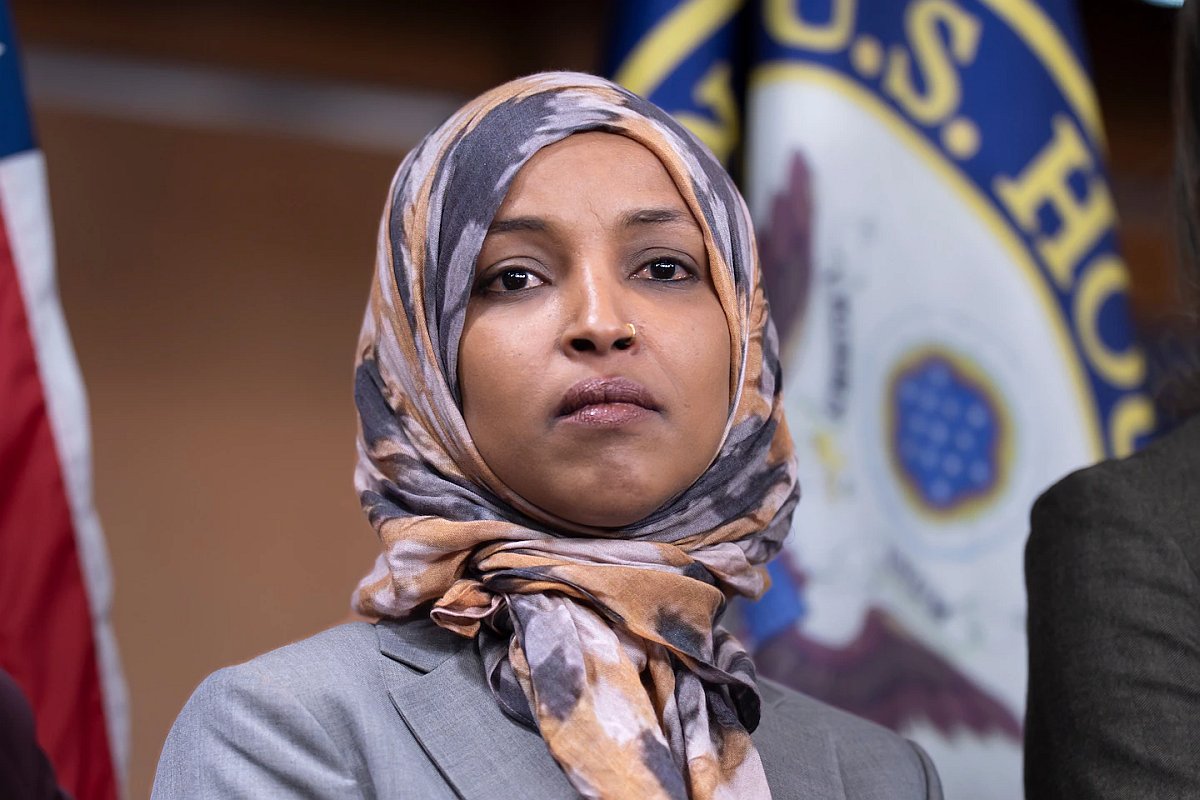
For years, Rep. Ilhan Omar gave an unequivocal answer to one of the most explosive allegations surrounding her political career: the claim that she once married her brother was false. This week, with federal investigators examining her immigration history and after agents searched her Washington home, Omar was asked about it again and gave a noticeably less absolute answer.
During an interview with MS NOW’s Chris Hayes, Omar described the allegation as “insane” and blamed it on a Somali blog and conservative activists. Hayes then asked whether she was related to her former husband Ahmed Nur Said Elmi at all, or whether there was some “weird kernel of truth” behind the story.
Omar replied: “Not to my knowledge.”
That answer does not prove Elmi was her brother, and no court or federal agency has established that allegation as fact, yet. But it was a significant change in tone from Omar’s previous denials, and it comes at a particularly sensitive moment as federal investigators take another look at parts of her immigration and naturalization history.
The Timeline Behind the Controversy
The marriage history has always been complicated, and laying it out chronologically helps explain why the issue has never fully gone away.
- 2002: Omar enters into a religious marriage with Ahmed Hirsi, the father of her children
- 2009: Omar legally marries Ahmed Nur Said Elmi
- 2011: Omar says she and Elmi separate in their faith tradition, although they remain legally married
- 2012: Omar says she reconciles with Hirsi and later has another child with him
- 2014 and 2015: Omar and Hirsi file joint federal tax returns even though Omar is still legally married to Elmi
- 2017: Omar’s legal divorce from Elmi is finalized
- 2018: Omar legally marries Hirsi
- 2019: The Minnesota Campaign Finance Board says Omar improperly used campaign funds for legal expenses related in part to correcting her tax filings
- 2026: Federal investigators begin examining Omar’s immigration and naturalization history, and agents search her Washington residence
The tax issue did not establish immigration fraud, but it did document a real contradiction between Omar’s legal marital status and the way she and Hirsi were presenting themselves for tax purposes. That history is one reason the marriage questions have remained politically and legally relevant.
The Records Raised More Questions
A lengthy Star Tribune investigation found additional circumstances that kept the controversy alive. Public records showed periods in which Omar, Elmi and Hirsi were associated with the same Minnesota address, and the newspaper also found that Omar and Elmi attended North Dakota State University during overlapping periods.
None of that proves a sibling relationship. But the overlap made the nature of Omar’s relationship with Elmi more difficult to explain as a conventional marriage, particularly because she had resumed her relationship with Hirsi while still legally married to Elmi. The Star Tribune ultimately said it could neither prove nor disprove the allegation that Elmi was Omar’s brother, a rather damning admission.
The Deleted Social Media Posts
Some of the most frequently cited evidence came from social media accounts connected to Omar and Elmi. One screenshot, reportedly originating from Elmi’s Instagram account in 2012, appeared to show him holding Omar’s newborn daughter while referring to the child as a “niece,” while other images circulated appeared to show continued contact between Omar and Elmi after the period when Omar later said in divorce filings that she had lost contact with him.
The original accounts and many of the posts were later deleted, which made independent verification more difficult. That deletion has fueled suspicion for years, but reporters were generally forced to rely on screenshots preserved rather than the original material, leaving the evidence suggestive rather than conclusive.
Omar Never Released the Records That Could Clarify More of It
The controversy also persisted because Omar declined to make her immigration records and some related documentation public. When the Star Tribune revisited the issue in 2019, Omar would not provide the newspaper with her immigration or tax records, while reporters also struggled to independently verify family relationships from Somalia because of limited government documentation.
That cuts both ways. It makes the allegation difficult to prove conclusively, but it also makes it difficult for outside reporters to conclusively disprove. Omar has argued that she should not have to prove a negative, while critics have pointed to the unusual marriage timeline, tax filings, address records and social-media trail as reasons the issue deserved more explanation.
Now There Is a Federal Investigation
The old controversy has taken on new importance because federal investigators are examining Omar’s immigration and naturalization history. According to Reuters, federal agents searched Omar’s Washington residence as part of an investigation into whether Omar or members of her family provided false information in immigration or citizenship paperwork.
A sealed search warrant reportedly identifies conspiracy, immigration fraud and false statements among the crimes under investigation. The Washington Post has reported that investigators are also examining documents related to Omar’s arrival in the United States as a refugee and her subsequent citizenship.
The probe is broader than the brother-marriage allegation, and no charge has established that Omar committed marriage fraud. But investigators now have access to government records, devices and documents that journalists never had when they tried to answer these questions years ago.
Why “Not to My Knowledge” Matters
The available evidence still does not allow us to state as fact that Omar married her brother. What it does show is a highly unusual marriage history, improper tax filings, overlapping addresses, deleted social-media material that reporters could not fully authenticate, unanswered questions about Elmi’s relationship to Omar’s family and now an active federal investigation into her immigration history.
Against that backdrop, “not to my knowledge” is a notably different answer from the categorical denials Omar gave when the controversy first erupted. She did not simply say Elmi was not her brother. Instead, she used language that leaves far more room than her earlier statements did.
That is what makes the new interview significant. Omar insists she has done nothing wrong and says the federal investigation is politically motivated, but the questions that were never fully resolved years ago are now back under official scrutiny at the same moment her public answer has become more qualified and legally cautious.
The allegation remains legally unproven, but the change in wording is real, and so is the renewed federal scrutiny surrounding the records that could help settle the issue.