
Florida wasn’t supposed to be part of the conversation. Donald Trump carried the state by 13 points in 2024, Republicans now hold a voter-registration advantage of roughly 1.5 million, and the state that once decided presidential elections by a few hundred votes has become one of the GOP’s most important strongholds.
But with the midterm elections less than six weeks away, some Republicans are sounding alarms even there. At the same time, Republican candidates in several competitive states are putting distance between themselves and Trump on the Iran war as fuel prices soar and voters grow increasingly unhappy with the cost of living.
That doesn’t mean Florida is suddenly turning blue or that Republicans are headed for defeat in November. Some recent Florida polling still shows Republicans with comfortable leads. But the warning signs in Florida are part of a broader political picture that looks considerably different from the one that sent Trump back to the White House less than two years ago.
Republicans Sound the Alarm in Florida
A new report from POLITICO describes growing concern among some Florida Republicans about enthusiasm, fundraising and the political environment heading into November. “We are hemorrhaging,” one Florida Republican strategist told the outlet.
That’s a striking concern to hear in Florida. As of Aug. 31, Republicans had approximately 5.65 million active registered voters in the state compared with about 4.10 million Democrats, according to Florida’s official voter-registration statistics. That’s a Republican advantage of roughly 1.55 million voters.
The polling, however, has produced conflicting signals. A recent St. Pete Polls survey had Republican Sen. Ashley Moody and Democrat Angie Nixon tied at 45% in the Senate race. The same poll had Republican Byron Donalds ahead of Democrat David Jolly by just one point, 44% to 43%, in the governor’s race. Another poll released this week paints a very different picture.
Stetson University (Sept. 12-19, 806 likely voters)
- Byron Donalds (R): 51%
- David Jolly (D): 39%
In the Senate race:
- Ashley Moody (R): 51%
- Angie Nixon (D): 40%
Those numbers are an important reality check. There isn’t enough evidence to say Florida’s Republican advantage has disappeared, and the GOP’s enormous registration advantage remains intact. What’s notable is that some Republicans are raising alarms in a state the party has dominated in recent elections.
Even Trump’s Closest Allies Are Making Changes
There are also signs that some candidates are changing how prominently they feature the president. Donalds built much of his national political profile as one of Trump’s most visible congressional allies and received Trump’s endorsement for governor. But The Guardian reported this week that Trump’s image and endorsement have become less prominent on Donalds’ campaign website.
That doesn’t tell us why the campaign made the changes. Donalds remains a Trump ally and has not renounced the president’s support. But similar signs of distance are appearing in states where Republicans face much closer elections, and in those races the disagreements are becoming much more public.
Iowa Republicans Are Breaking With Trump on Iran
Iowa may provide the clearest example. Republican Senate candidate Ashley Hinson is running in a race that several recent polls show as competitive, and this week she publicly called for the Iran war to end immediately, putting herself at odds with Trump’s approach. Hinson has also called for emergency action to reduce fuel costs, including temporarily suspending the federal gas tax, pausing diesel exports and creating a diesel-relief program.
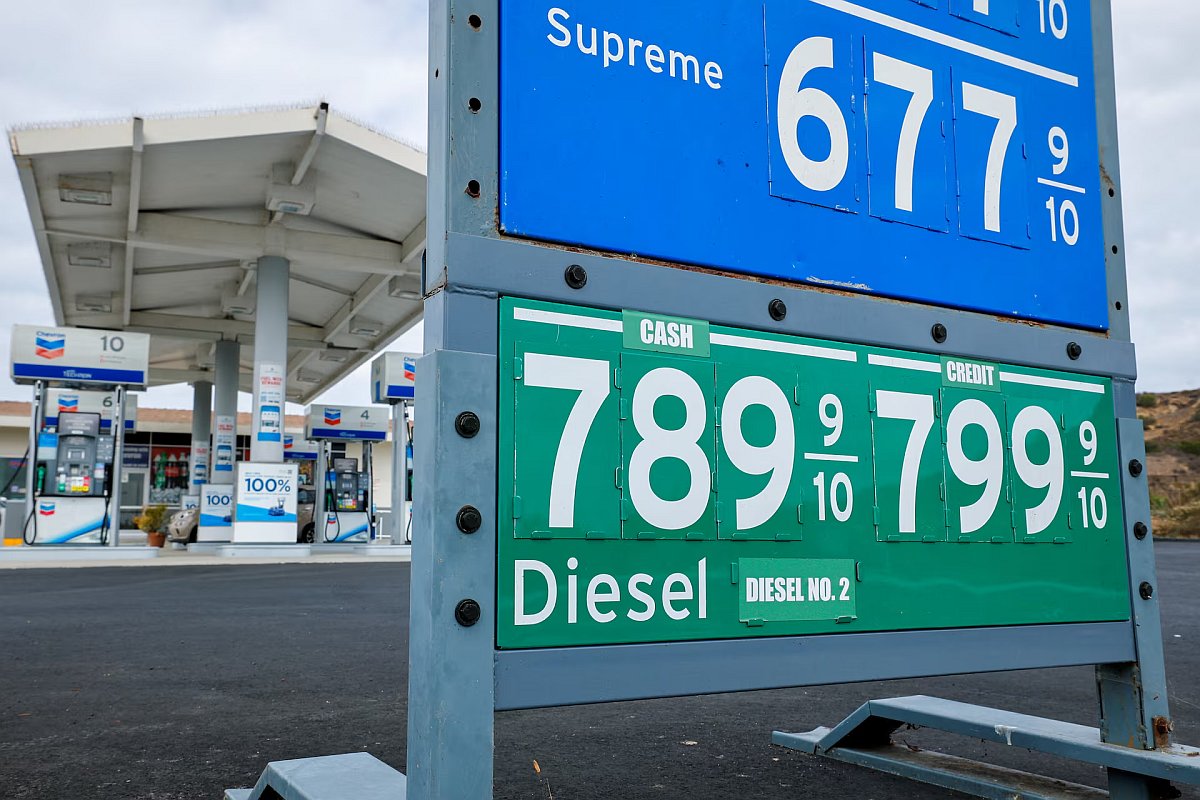
Her position comes as diesel prices have surged to levels that hit particularly hard in an agricultural state like Iowa. According to the U.S. Energy Information Administration, the national average price for on-highway diesel reached $6.529 per gallon on Sept. 21. In the Midwest, the average climbed to approximately $6.68 per gallon. Two weeks earlier, the national average was $5.967.
For farmers, trucking companies and businesses that move goods by road, diesel isn’t simply another number on a gas-station sign. It feeds into the cost of planting, harvesting, shipping and moving products across the country, which gives the price spike political significance well beyond the people filling up diesel trucks.
It’s Not Just Iowa
Hinson isn’t the only Republican candidate putting some distance between herself and Trump on the war. Michigan Republican Senate candidate Mike Rogers has called for the conflict to end quickly while emphasizing the effect high energy prices are having on Americans. Wisconsin gubernatorial candidate Tom Tiffany has said it is “time to come home,” while Republican Reps. Mariannette Miller-Meeks and Zach Nunn of Iowa have supported efforts to place limits on the president’s war authority.
The disagreements reached the Senate floor Thursday, where lawmakers considered a resolution that would have required Trump to end U.S. involvement in the Iran war unless Congress authorized continued military action. The measure failed, but the vote forced senators to publicly take a position on a war that is increasingly colliding with domestic politics. Reuters reported Thursday that the political pressure is becoming particularly visible among Republicans facing voters this fall.
Diesel Is Now Above $6 a Gallon
The political problem isn’t limited to foreign policy. The war is being felt at home through energy prices, and diesel has become especially painful. The national average jumped by more than 56 cents per gallon in just two weeks.
U.S. average on-highway diesel price
- Sept. 7: $5.967 per gallon
- Sept. 21: $6.529 per gallon
Reuters has reported that U.S. diesel inventories have fallen to their lowest level for this time of year on record. The EIA has pointed to tight global supplies of distillate fuel and elevated crude-oil prices as major factors behind the increase.
Gasoline prices matter politically because virtually every voter sees them. Diesel prices can be less visible, but their impact spreads through much of the economy. Higher trucking and agricultural costs can eventually show up in the prices consumers pay for food and other goods, adding another source of pressure at a time when voters are already unhappy about the cost of living.
The Polling Shows the Political Problem
The disagreements among Republicans come as Trump’s polling has weakened, particularly on economic issues. A recent Reuters/Ipsos poll put Trump’s overall approval at 32%, while his numbers on the cost of living were considerably worse.
Reuters/Ipsos
- Trump overall approval: 32%
- Approve of Trump’s handling of the cost of living: 17%
The same survey found Trump’s approval among Republicans had fallen from 82% to 73% in one week. Democrats also held an eight-point advantage when voters were asked which party they would support for Congress. No single national poll tells us what will happen in individual House, Senate or governor’s races, but candidates running in competitive states don’t need to see a national landslide developing before they start worrying about the political environment.
Watch What the Candidates Are Doing
Hinson is calling for an immediate end to the Iran war while proposing emergency measures to lower diesel prices. Rogers is calling for the war to end quickly. Other Republicans are challenging Trump’s war authority. In Florida, some Republicans are publicly raising concerns about a state the party has dominated in recent elections.
None of that proves these candidates are headed for defeat, and it doesn’t tell us the private reason each politician has taken a particular position. Republicans also continue to hold substantial advantages in places like Florida, while individual polls in several races remain sharply divided. But the timing is difficult to miss. Fuel prices are rising, Trump’s economic approval has weakened and Republicans facing voters in competitive races are increasingly willing to stake out positions that differ from his.
With less than six weeks until Election Day, the question isn’t simply whether Republican candidates still support Trump. It’s how closely they want their own campaigns tied to the president when voters go to the polls.