
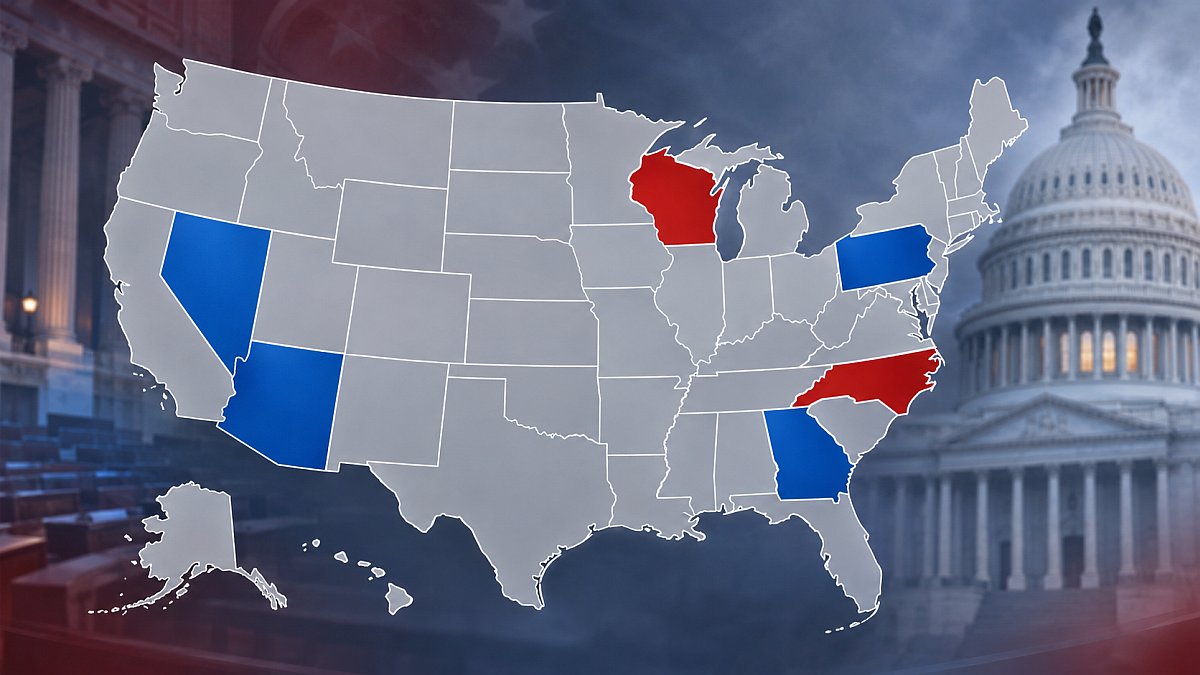
The 2028 presidential race is already beginning to take shape, but the fight for the Senate will be running alongside it. For Republicans, the most obvious defensive problems are North Carolina and Wisconsin. For Democrats, the pressure points begin with Arizona and Georgia, along with Nevada and Pennsylvania.
A new Reuters analysis of the 2028 map highlights those states as the places most likely to shape the next fight for control of the chamber. The basic math is different from 2026. Republicans will have more seats up for election, while Democrats begin with fewer obvious pickup opportunities, but several of the most important seats sit in states that will also be central to the presidential campaign.
The basic math is different from 2026. Republicans will have more seats up for election, while Democrats begin with fewer obvious pickup opportunities. But the seats that are vulnerable sit in some of the same states likely to dominate the presidential campaign, meaning the Senate and White House races could become closely intertwined.
Republicans Have to Defend North Carolina
North Carolina is probably the first place Democrats will look.
Republican Sen. Ted Budd’s term expires in 2029, according to the official Senate Class III list, putting his seat on the ballot in 2028. North Carolina remains one of the country’s most closely divided large states, and Democrats just demonstrated in the 2026 midterms that they can win a high-profile Senate race there.
That does not automatically make Budd vulnerable two years from now. Presidential turnout will produce a different electorate, and Republicans have remained highly competitive statewide. But it is difficult to draw an early 2028 Senate map without circling North Carolina.
The presidential race will only add to the attention. North Carolina will again carry a large block of electoral votes, ensuring that both parties are already spending heavily in the state while the Senate race develops underneath it.
Wisconsin Is the Other Obvious Republican Defense
Then there is Wisconsin, where Republican Sen. Ron Johnson’s seat is scheduled to be on the ballot. The Senate’s official list currently places Johnson in Class III, meaning his term expires at the beginning of 2029. Whether Johnson seeks another term will become one of the first important questions surrounding the race.
Wisconsin has spent years near the center of national politics, routinely producing close presidential, Senate and statewide elections. It will almost certainly receive enormous attention in the 2028 presidential contest regardless of who runs for either party.
That makes the Senate seat difficult to separate from the larger electoral environment. If Johnson runs again, Democrats would be trying to defeat a nationally known incumbent. If he retires, both parties would suddenly be fighting over an open seat in one of the country’s most important presidential battlegrounds.
Reuters identifies North Carolina and Wisconsin specifically as Republican-held seats that could attract Democratic attention in 2028.
Democrats Have Their Own Battleground Problem
The map is hardly one-sided. Democrats will be defending senators in Arizona, Georgia, Nevada and Pennsylvania, four states Republicans have repeatedly contested at both the presidential and Senate level.
Mark Kelly’s Arizona seat and Raphael Warnock’s Georgia seat may attract particular attention because both senators are also being discussed as possible Democratic presidential contenders. The Senate’s Class III roster confirms that both terms expire in 2029.
That does not mean either seat is currently open. Kelly has not announced a presidential campaign, and neither has Warnock. Both remain sitting senators whose seats are scheduled for election in 2028.
But a White House campaign could eventually complicate the map. Reuters notes that presidential bids by Kelly or Warnock could turn one or both into open-seat Senate races, depending on the choices they make and the applicable election rules. For now, that remains a possibility rather than a fact.
Arizona and Georgia Could Have Two Campaigns at Once
Even if Kelly and Warnock simply seek reelection, their states will be important.
Arizona has become one of the most persistently competitive states in presidential politics, and Republicans will have another opportunity to challenge Kelly after failing to defeat him in 2022. Georgia has followed a similar trajectory, with both parties capable of winning statewide depending on the year and the candidates.
Warnock has already survived several expensive statewide races. A 2028 reelection campaign would take place at the same time Georgia voters are choosing a president, potentially making the state one of the most heavily contested places on the entire national map.
The same would be true in Arizona. If both states remain competitive at the presidential level, Senate candidates there could benefit from enormous turnout operations and advertising spending while also being pulled along by whatever happens at the top of the ticket.
Don’t Forget Nevada and Pennsylvania
Democratic Sens. Catherine Cortez Masto in Nevada and John Fetterman in Pennsylvania are also scheduled to face voters in 2028. Both states have a long recent history of close statewide elections, and both are already expected to receive significant presidential attention.
Reuters includes Arizona, Georgia, Nevada and Pennsylvania among the Democratic-held swing-state seats Republicans are likely to examine. Republicans failed to win those seats when they were last on the ballot in 2022, but six years is a long time in politics and the national environment in 2028 may look very different.
New Hampshire could also draw interest depending on the environment and candidates, while the full Class III roster contains several other seats that could become competitive if an incumbent retires or a strong challenger emerges. That is why the map should be treated as a starting point rather than a final list of battlegrounds.
The Presidential Race Will Shape Everything
The biggest difference between the coming Senate cycle and the midterms is obvious: 2028 is a presidential year.
North Carolina, Wisconsin, Arizona, Georgia, Nevada and Pennsylvania are not simply Senate battlegrounds. They are also states likely to receive enormous attention from the presidential campaigns. That means the Senate candidates running there will share organizers, donors, television markets and voters with the White House race.
It also creates interesting complications if sitting senators decide they want to run for president themselves. Kelly and Warnock are already being mentioned in early Democratic discussions, although neither has entered the race. Other senators whose terms expire in 2028 could eventually face similar choices.
That is one reason the 2028 Senate map is worth watching now rather than waiting until after the presidential primaries begin. Decisions made by potential White House candidates can change individual Senate races long before voters ever cast a ballot.
North Carolina and Wisconsin Are the Early Republican Tests
The entire map will move over the next two years. Incumbents will retire, candidates will emerge and states that currently look safe may become competitive.
But the early structure is already visible. Republicans have to protect North Carolina and Wisconsin while searching for opportunities among Democratic-held seats in Arizona, Georgia, Nevada and Pennsylvania. Democrats, meanwhile, will try to capitalize on the Republican defenses without allowing their own presidential ambitions to create new Senate problems.
That makes North Carolina and Wisconsin a logical place to begin watching the 2028 Senate battle. They are Republican-held seats in states Democrats know they can contest, and both will sit directly underneath what could be two of the most expensive presidential campaigns in the country.
And on the other side, keep an eye on Arizona and Georgia. They are already important Senate defenses. If Mark Kelly or Raphael Warnock eventually decides to pursue the White House, they could become considerably more complicated.
Follow the presidential side of the cycle on our 2028 Presidential Election page, track the developing field in our 2028 Presidential Candidates directory, and follow the latest numbers on our 2028 Presidential Polls page.