
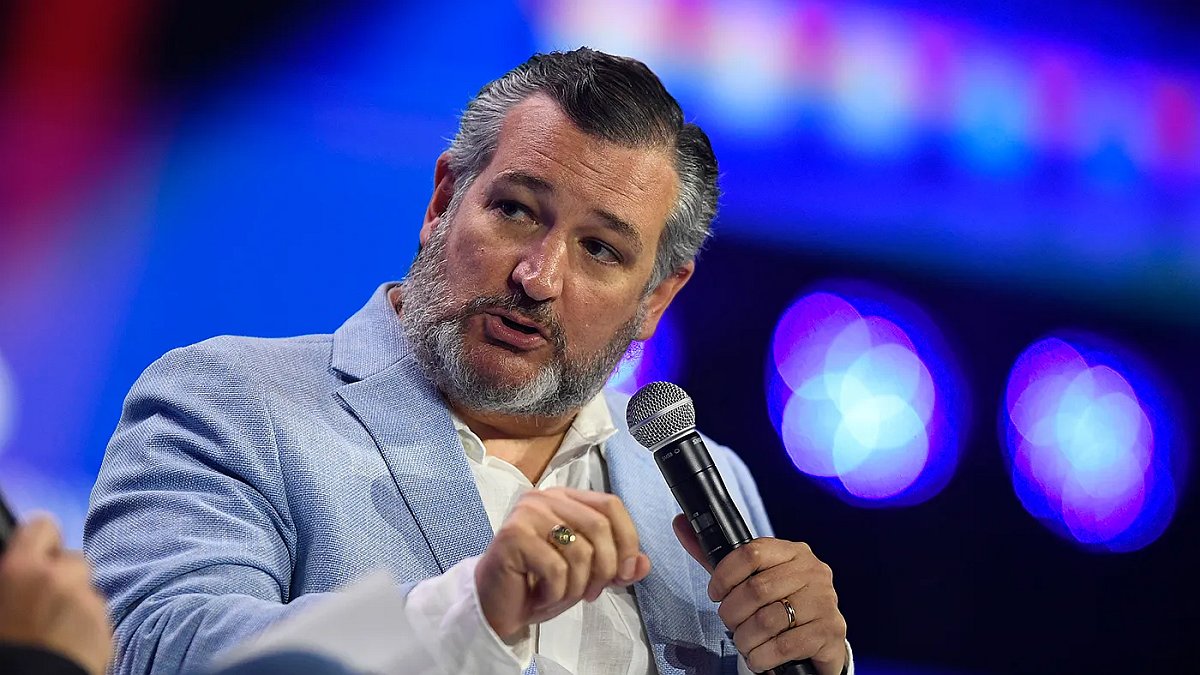
Ted Cruz has been dropping hints about another presidential campaign for months. Now there is something considerably more concrete behind the speculation.
Before the midterms, Cruz told conservative economist Stephen Moore over a steak dinner that he planned to launch another bid for the White House, Moore told Reuters. Two other people familiar with Cruz’s activity told the news organization that the Texas senator has spoken openly with associates about another run and has begun early preparations.
That is not a campaign announcement, and Cruz has not publicly committed himself to the race. But it goes further than the usual Washington guessing game about who might run in 2028. Cruz has apparently been telling people privately that he intends to do it, while becoming increasingly direct in public about his presidential ambitions.
In August, Cruz said on Texas Lt. Gov. Dan Patrick’s podcast that “it’s no secret that I want to be president.” Asked whether Republicans had already settled on Vice President JD Vance as Donald Trump’s successor, Cruz was equally clear: “Oh no.” He said there would be a broader discussion about what the Republican Party believes and promised that he would be part of it. The Texas Tribune reported those comments at the time.
Cruz Appears to See a Lane Against Vance
The 2026 midterms changed the Republican succession fight. Before the election, Vance was widely treated as Trump’s natural heir and the likely center of the 2028 Republican field. After Republicans lost the House and Senate, potential rivals have become much less willing to assume the nomination belongs to the vice president.
Reuters reports that Cruz has spent months positioning himself as a different kind of conservative from Vance, emphasizing market-oriented economic policies and a more traditional Republican approach to foreign affairs. Moore described Cruz as presenting himself as the heir to the party’s Reagan wing.
That contrast could become one of the more important dividing lines in a Republican primary. Vance represents the party’s newer populist wing, with greater skepticism toward military intervention overseas and less attachment to traditional Republican economic orthodoxy. Cruz has increasingly emphasized free markets, a more conventional internationalist foreign policy and strong support for Israel while criticizing some of the isolationist voices that have gained influence on the right.
The two men would therefore be competing for more than Trump’s political inheritance. A Cruz-Vance contest could become a debate over what parts of the pre-Trump Republican Party survive after Trump leaves office and how much of the populist movement Vance helped build becomes the GOP’s permanent identity.
Vance Still Starts With Major Advantages
Cruz would not be entering an empty field. Vance remains the sitting vice president, possesses a national political organization and has spent the past several years cultivating relationships with Republican activists and donors. Reuters reports that four people familiar with his thinking believe he is likely to run, although he has not formally made that decision.
Vance also continues to sit atop our 2028 Republican polling tracker, giving him a measurable early advantage while most of his potential opponents are still deciding whether to enter.
But the midterms appear to have ended the assumption that Republicans will simply clear the field for him. Bob Vander Plaats, the influential Iowa evangelical leader, told Reuters that a better Republican performance would likely have left Vance as the clear heir apparent. After the losses, he expects competition.
Cruz has something most of the possible challengers do not: experience running a serious presidential campaign. He spent much of the 2016 primary as Trump’s strongest remaining rival and built organizations in Iowa, South Carolina and other early states before eventually losing the nomination. A second campaign would begin with a much clearer understanding of how the primary process works than Cruz had the first time.
Youngkin and DeSantis Are Looking Too
Cruz is not alone in reassessing the race.
Former Virginia Gov. Glenn Youngkin is considering a campaign, according to Reuters, and launched a national education advocacy organization earlier this year that Republicans have viewed as a possible platform for a presidential run. Moore said that if Youngkin sees an opening, he expects him to get into the race.
Youngkin could offer Republicans a different argument altogether. He has supported Trump without becoming as closely associated with the administration as Vance, giving him the ability to run more heavily on his record as a governor and businessman rather than on Washington politics.
Florida Gov. Ron DeSantis is also keeping his options open after his unsuccessful 2024 campaign. Reuters reports that DeSantis is weighing both 2028 and the possibility of waiting until 2032, with an adviser citing concerns that the political environment following Trump’s second term could be difficult for Republicans. Florida’s comparatively strong Republican performance in the 2026 Democratic wave gives DeSantis another argument if he decides to run.
Rubio May Not Be Coming After All
Marco Rubio is the other name that keeps appearing whenever Republicans discuss an alternative to Vance, particularly among more traditional GOP donors. Three Republican donors told Reuters they hoped the secretary of state would enter the race.
But the latest reporting points in the opposite direction. Several people familiar with Rubio’s thinking told Reuters that a 2028 bid currently appears unlikely. Some expect him to leave government for the private sector after the Trump administration, while one former aide suggested 2032 may be a more realistic possibility.
That distinction matters. There may be Republicans who want Rubio to run, but there is currently much stronger evidence that Cruz himself is preparing for a campaign.
Cruz Is Moving Beyond the Speculation Stage
There is still plenty that could change before anyone votes. Trump has suggested he may stay out of the Republican primary, but an eventual endorsement could dramatically reshape the field. Vance has not formally entered. DeSantis and Youngkin are still weighing their options, and the political environment after the midterms has left some Republicans wondering whether 2032 might be a better year to run.
Cruz, however, is beginning to look less hypothetical. His public comments have become more direct, his political positioning has become clearer, and Reuters now reports that he privately told Moore he planned to launch another presidential campaign.
The more interesting question is no longer whether Ted Cruz still wants to be president. He has already answered that one.
The question heading into 2027 is whether Republican voters want the Reagan-style conservatism Cruz is beginning to offer, the populist successor model represented by Vance, or something else entirely.
Follow the developing field on our 2028 Republican Primary page, track the latest numbers on our 2028 Presidential Polls page, and see the full list of potential contenders in our 2028 Presidential Candidates directory.