
The Republican presidential race looked much simpler before the midterms.
Vice President JD Vance had spent much of the past two years positioning himself as the most natural successor to Donald Trump, with strong support inside the MAGA coalition and little indication that another top-tier Republican was eager to challenge him. Then Republicans lost the House, lost the Senate and suffered major defeats in states that had been central to the party’s electoral map.
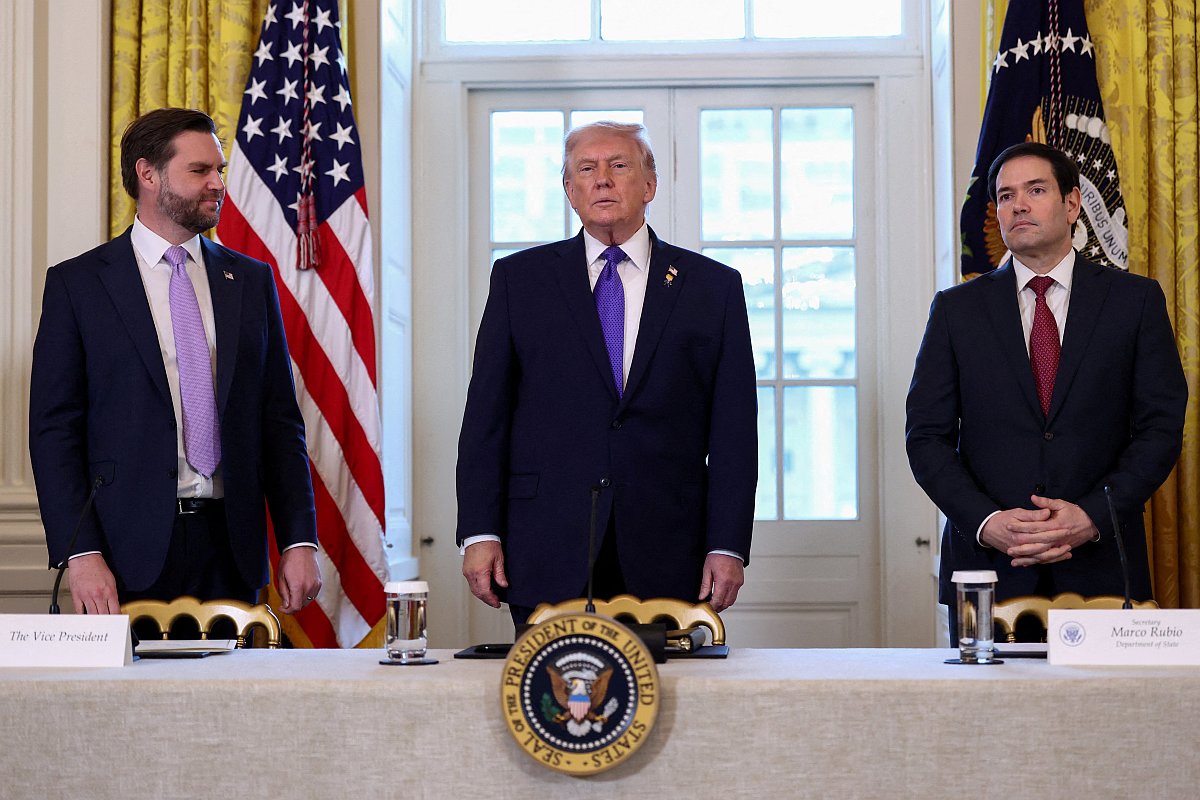
Now some Republicans on Capitol Hill are looking again at Secretary of State Marco Rubio.
Politico reported this week that a small but growing group of Republican lawmakers wants to encourage Rubio to run in 2028 rather than allow the nomination to become a Vance coronation. Political Wire summarized the reporting as a “Draft Marco” effort driven in part by Republicans who worry voters may continue to associate Vance with the unpopular parts of the Trump administration.
The effort remains just that: an effort by other Republicans. Rubio has not announced a campaign, has not said he intends to challenge Vance and has repeatedly tried to shut down questions about 2028. But after the midterms, the fact that Republican lawmakers are openly discussing an alternative at all is a notable change from where the race stood only a few weeks ago.
Why Rubio Looks Different After the Midterms
The argument for Rubio starts with the scale of the Republican defeat. Democrats did not merely edge out the GOP for control of Congress. Republicans lost Senate seats across several regions, surrendered the House and watched Democratic candidates make major gains with voters Trump had won in 2024.
Vance was one of the administration’s most visible campaign surrogates and is closely identified with the political coalition that returned Trump to office. After the election, he acknowledged that some Trump-Vance voters had turned against Republicans and blamed the war with Iran for much of the damage. His post-election message emphasized ending the war, bringing down prices and returning to what he described as an America First agenda. CBS News covered Vance’s post-election assessment.
Rubio occupies a different position even though he serves in the same administration. He has spent the second Trump term primarily on foreign policy rather than domestic politics and has avoided much of the day-to-day partisan combat that surrounds the White House. That allows Republicans interested in him to argue that he has the experience and visibility of a senior administration official without being quite as closely tied to the campaign operation that just lost the midterms.
Some of that is reflected in the new Reuters/Ipsos poll. Reuters reports that 45% of Republican voters described Rubio as an “excellent” potential presidential candidate, compared with 43% for Vance and 32% for Florida Gov. Ron DeSantis. The difference between Rubio and Vance is within the poll’s margin of error and should not be read as Rubio leading a Republican primary. The question asked voters to rate each candidate separately, not choose between them.
The underlying point is simpler than the headline number: Republican voters currently view both men as plausible nominees. The Reuters/Ipsos survey, conducted Nov. 6-9, included 1,705 adults and had a margin of error of roughly five points for the party-specific results. That is nowhere near enough to declare a frontrunner, but it does suggest Vance does not have the field to himself.
Rubio Is Not Acting Like a Candidate, At Least Publicly
The biggest obstacle to the “Draft Marco” effort is Rubio himself.
He told The New York Times last week that remaining in the Trump administration through the end of the president’s term “has always been my plan.” Rubio also rejected reports that he was considering leaving the administration early to prepare for a presidential campaign and said he would no longer discuss the election at all.
“I literally will not talk about 2028 anymore,” Rubio said, according to Reuters.
He repeated that position when reporters pressed him again during a foreign trip this week. More importantly, Rubio has previously said that if Vance runs, he would be among the first Republicans to support him. None of those statements sound like someone preparing an immediate primary challenge.
That has not stopped the lobbying. One Republican senator told Politico, according to published summaries of the report, that some lawmakers were still hoping they could “draft Marco.” Florida Rep. Mike Haridopolos said Rubio was ready to be president if he chose to pursue the office. Another report from Axios said Rubio’s phone filled with messages from supporters on election night urging him to reconsider after the scale of the Republican losses became clear.
Can Rubio Really Run as an Alternative to His Own Administration?
This is where a Rubio candidacy becomes more complicated.
If Republican voters want a sharp break from Trump after 2026, Rubio is an unusual person to provide it. He is the secretary of state, national security adviser and one of the most important officials in the administration. He cannot credibly campaign as an outsider to policies he has spent years helping execute and defend.
The Iran war illustrates the problem particularly well. Vance emerged from the midterms saying the war was a major reason Republicans lost and arguing that the party needed to change course. Rubio took a different position, acknowledging that the conflict was not necessarily popular, and said up front it was launched due to Israeli actions, but continuing to defend Trump’s decision to go to war as necessary to prevent Iran from obtaining a nuclear weapon.
That distinction could eventually give Republicans a genuine policy choice rather than merely a personality contest. Vance has increasingly emphasized economic nationalism, skepticism of prolonged foreign wars and a more confrontational break with parts of the traditional Republican foreign-policy establishment. Rubio remains closer to the party’s older national-security tradition, with a more conventional view of alliances, military power and America’s role abroad.
At the same time, both men are senior members of the same administration and both have spent years defending Trump. A Rubio campaign would therefore have to make a fairly narrow argument: not that everything since 2025 was wrong, but that he would be the better person to carry Republican policies forward after Trump leaves office.
Vance Still Has Advantages Rubio Would Have to Overcome
For all the new interest in Rubio, Vance remains deeply embedded in the Republican political operation. He has spent his vice presidency cultivating donors, campaigning for Republican candidates and building relationships with state party officials who will matter in the 2028 primaries.
He also has something Rubio does not: a natural claim to Trump’s political inheritance. Vance was Trump’s running mate, has developed his own following inside the MAGA movement and has already begun laying out a post-Trump version of the party centered on working-class voters, economic nationalism and a more restrained foreign policy.
Rubio’s broader appeal inside the party could become an advantage if Republicans decide after 2026 that they want a different tone or direction. But it could just as easily become a liability in a primary electorate that remains strongly attached to Trump and suspicious of politicians associated with the pre-MAGA Republican Party.
The new Reuters/Ipsos numbers are useful precisely because they show how unsettled the question remains. Rubio and Vance receive similar evaluations from Republican voters, while DeSantis remains well regarded by a substantial portion of the party. Those are candidate ratings, not primary vote shares, and the nomination contest is still far enough away that many Republicans who eventually run are probably not yet campaigning openly.
The Midterms Changed the Question
Before Nov. 3, Republicans discussing 2028 were mostly asking when Vance would run and who might fill out the rest of the field. After the midterms, some are asking whether the party should have a genuine contest for the nomination in the first place.
That does not mean Rubio is about to announce a campaign. His public position remains that he plans to serve Trump through January 2029, and people close to him have said he is focused on his current jobs rather than organizing a presidential bid. But the pressure from Republican lawmakers and donors shows that Vance’s path is no longer being treated as automatic by everyone in the party.
We looked last week at how Republican contenders began defining their post-midterm positions almost immediately after the defeat. Rubio is a different case because he has been trying to avoid defining a lane at all. Other Republicans are now trying to define one for him.
The next question is whether Rubio continues refusing to engage or eventually decides that the opening created by the midterms is too significant to ignore. For now, Republicans appear to have at least two potential successors to Trump whom voters view seriously, even if only one of them is openly moving toward the race.
Follow the developing field on our 2028 Republican Primary page, see the latest numbers on our 2028 Presidential Polls page, and track the full list of potential contenders in our 2028 Presidential Candidates directory.